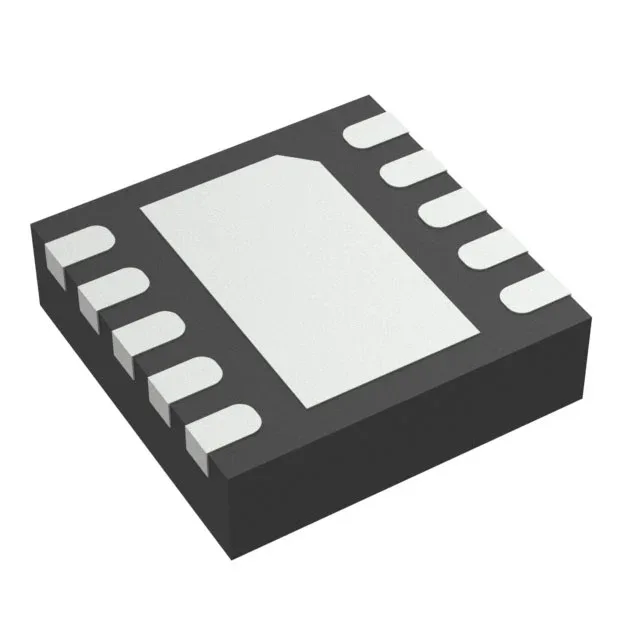
Texas Instruments TPS61200DRCR — DC-DC Power Modules

TPS61200DRCR Boost Converter, 0.3V-5.5V Input, 1.2A Switch

MPNTPS61200DRCR
Active

Texas Instruments TPS61200DRCR, Step-Up (Boost) Switching Regulator, Adjustable Output, 0.3V to 5.5V Input, 1.2A Switch, Synchronous Rectifier, 1.25MHz~1.65MHz, 10-VSON (3x3mm), -40°C to 85°C.

$2.3400Ref. price · indicative, final on quote
Independent supplier — new & surplus stockAuthenticity-screened · ESD-safe packingListing updated Jul 2026

Specifications

TPS61200DRCR specifications
ParameterValue
Output typeAdjustable
MountingSurface Mount
Voltage - input5.5V
Voltage - output5.5V
Voltage - output (Min (Fixed))1.8V
Output current1.2A (Switch)
Frequency - switching1.25MHz ~ 1.65MHz
I/O channels1
Operating temperature-40°C~85°C(TA)
PackageTape & Reel (TR); Cut Tape (CT)
FunctionStep-Up
TopologyBoost
Case10-VFDFN Exposed Pad
Output configurationPositive
Synchronous rectifierYes

Product details

0.3V startup — what it means for battery-powered designs

The TPS61200DRCR is a boost converter that starts up from an input as low as 0.3V and regulates down to that same floor, making it a fit for single-cell alkaline, NiMH, or lithium chemistries where the cell voltage sags below 1V under load. With a 1.2A switch current limit and synchronous rectification, it delivers useful output current from a depleted cell without the forward-drop penalty of an external Schottky diode.

Adjustable output and switching frequency

Output is adjustable from a 1.8V minimum up to 5.5V maximum, matching the input ceiling — the feedback divider sets the regulation point, so the same part works for 3.3V rails or 5V USB outputs. The switching frequency runs between 1.25 MHz and 1.65 MHz, which keeps the inductor in the 2.2 µH to 4.7 µH range — small enough for the 10-VSON (3x3 mm) footprint.

Frequently asked questions

Is TPS61200DRCR compatible with lithium-ion batteries?

Yes. With a minimum input of 0.3V and a maximum of 5.5V, it covers the full discharge curve of a single-cell Li-ion (3.0V to 4.2V) and can start up from a deeply discharged cell at 2.5V or lower.