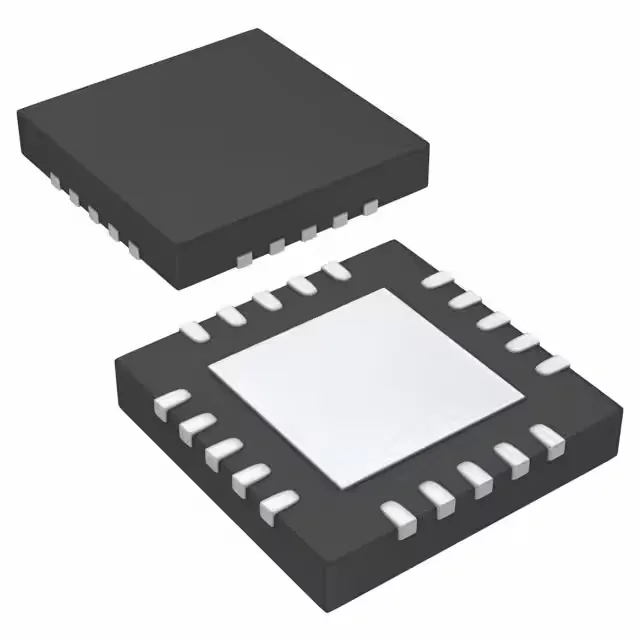
Texas Instruments TPS61187RTJR — Power Management (PMIC / Gate Driver)

TPS61187RTJR Boost LED Driver, 6-Ch, 38 V, 1 MHz, Active

MPNTPS61187RTJR
Active

Texas Instruments TPS61187RTJR, DC DC Regulator, Step-Up (Boost) topology, 6 outputs, 30 mA per channel, 38 V output, 1 MHz switching, PWM dimming, 20-WFQFN Exposed Pad, -40°C to 85°C.

$0.9870Ref. price · indicative, final on quote
Independent supplier — new & surplus stockAuthenticity-screened · ESD-safe packingListing updated Jul 2026

Specifications

TPS61187RTJR specifications
ParameterValue
TypeDC DC Regulator
MountingSurface Mount
Voltage - output38V
Supply voltage4.5V
Current - output (Channel)30mA
Frequency1MHz
I/O channels6
Operating temperature-40°C~85°C(TA)
DimmingPWM
PackageTape & Reel (TR); Cut Tape (CT)
TopologyStep-Up (Boost)
ApplicationsBacklight
Case20-WFQFN Exposed Pad
Internal switchYes

Product details

Boost LED driver for backlight — six channels, 38 V rail

The Texas Instruments TPS61187RTJR is a step-up (boost) DC DC regulator designed for backlight applications. It integrates six current-sink outputs, each rated for 30 mA, and delivers a regulated output voltage up to 38 V — enough to drive multiple LED strings in series from a single lithium-ion or 5 V rail. Dimming is handled via PWM input, giving the display controller direct control over LED brightness without analogue drift.

Input supply range spans 4.5 V to 24 V, covering common rails from a single-cell Li-ion (3.7 V boosted to 5 V) up to a 24 V industrial bus.

Housed in a 20-pin WFQFN with exposed pad (4x4 mm body), the TPS61187RTJR requires a surface-mount reflow process.

Frequently asked questions

What is the switching frequency of TPS61187RTJR?

The switching frequency is 1 MHz. This fixed frequency allows selection of a small inductor (typically 4.7 µH to 10 µH) and keeps switching losses moderate for the output power level.

What is the maximum output current per channel?

Each of the six outputs is rated for 30 mA. Total output current is limited by the internal switch current limit and thermal dissipation — the 30 mA per channel figure is the sink rating, not the total LED string current.