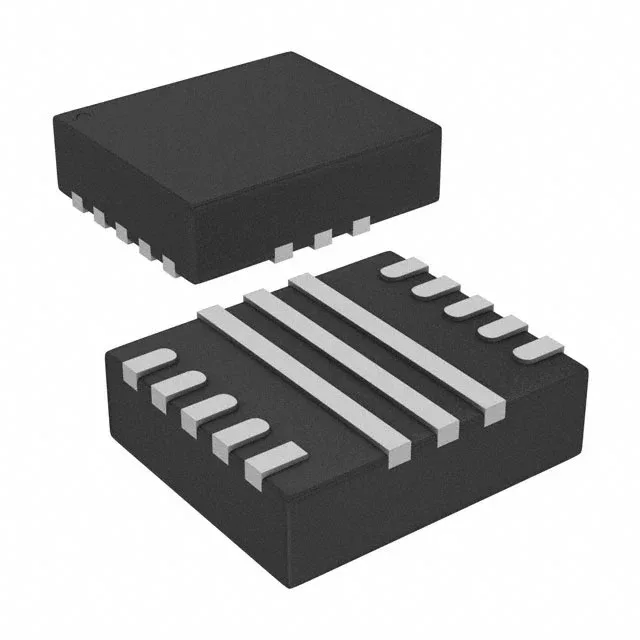
Texas Instruments TPS611781RNWT — Power Management (PMIC / Gate Driver)

TPS611781RNWT Boost Converter IC – 10 A Switch, 2.2 MHz

MPNTPS611781RNWT
Active

Texas Instruments TPS611781RNWT, step-up boost converter, adjustable output, 10 A switch, 2.2 MHz switching frequency, synchronous rectification, 13-VQFN-HR (3x3.5 mm) package, -40°C to 125°C junction temperature range.

$5.8700Ref. price · indicative, final on quote
Packaging13-PowerVFQFN
RoHSROHS3 Compliant
Independent supplier — new & surplus stockAuthenticity-screened · ESD-safe packingListing updated Aug 2026

Specifications

TPS611781RNWT specifications
ParameterValue
Output typeAdjustable
MountingSurface Mount
Voltage - input2.7V
Voltage - output20V
Voltage - output (Min (Fixed))4.5V
Output current10A (Switch)
Frequency2.2MHz
I/O channels1
Operating temperature-40°C~125°C(TJ)
PackageTape & Reel (TR); Cut Tape (CT)
FunctionStep-Up
TopologyBoost
Case13-PowerVFQFN
Output configurationPositive
Synchronous rectifierYes

Product details

The TPS611781RNWT is a step-up (boost) converter from Texas Instruments with a 10 A internal switch, 2.2 MHz fixed switching frequency, and synchronous rectification. Output is adjustable from 4.5 V up to 20 V, matching the maximum input voltage.

2.7 V to 20 V input, 4.5 V to 20 V output

Input range spans 2.7 V to 20 V. The minimum output is 4.5 V.

Active production, 13-VQFN-HR package

It is ROHS3 compliant. The package is a 13-lead VQFN-HR measuring 3 mm x 3.5 mm — a small footprint that demands careful thermal pad layout. Sourcing is per RFQ; confirm current lead time and pricing at quote time.

Synchronous rectification and junction temperature range

Synchronous rectification replaces the output diode with a second FET, improving efficiency at high output currents. The 2.2 MHz switching frequency keeps the ripple within the inductor's AC loss budget.

Frequently asked questions

Is TPS611781RNWT obsolete?

No. It is ROHS3 compliant.

What is the switching frequency of TPS611781RNWT?

The switching frequency is fixed at 2.2 MHz. This allows small inductor and capacitor values but requires attention to layout to minimize switching losses and EMI.