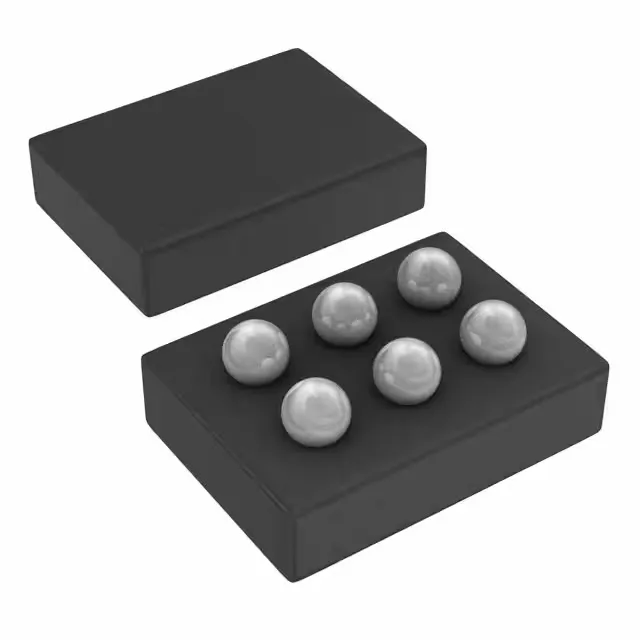
Texas Instruments TPS610995YFFT — Power Management (PMIC / Gate Driver)

TPS610995YFFT Boost Converter – 0.7V-5.5V Input

MPNTPS610995YFFT
Active

Texas Instruments TPS610995YFFT, step-up boost converter, fixed 3.6V output, 800mA switch current, 6-UFBGA DSBGA package, -40°C to 125°C junction range.

$2.1000Ref. price · indicative, final on quote
Packaging6-UFBGA, DSBGA
RoHSROHS3 Compliant
Independent supplier — new & surplus stockAuthenticity-screened · ESD-safe packingListing updated Aug 2026

Specifications

TPS610995YFFT specifications
ParameterValue
Output typeFixed
MountingSurface Mount
Voltage - input5.5V
Voltage - output (Min (Fixed))3.6V
Output current800mA (Switch)
I/O channels1
Operating temperature-40°C~125°C(TJ)
PackageTape & Reel (TR); Cut Tape (CT)
FunctionStep-Up
TopologyBoost
Case6-UFBGA, DSBGA
Output configurationPositive
Synchronous rectifierYes

Product details

Boost converter for single-cell supplies

The TPS610995YFFT is a fixed-output step-up (boost) converter from Texas Instruments, designed to generate a regulated 3.6V rail from input voltages as low as 0.7V and up to 5.5V. Its 800mA switch current rating determines the maximum output current at a given input voltage — expect roughly 200-250 mA at 3.6V out from a 1.5V cell, less from a near-depleted battery.

6-DSBGA footprint and thermal reality

Housed in a 6-bump DSBGA measuring roughly 1.2 x 0.8 mm, this package demands a clean PCB layout with short, wide traces to the inductor and output capacitor — the scorch mark on a dead board often traces to a lifted bump from thermal cycling.

Frequently asked questions

Does TPS610995YFFT require any external components?

Like any boost converter, it needs an inductor, input capacitor, and output capacitor. The synchronous rectifier means no external Schottky diode is required — a common part that fails on older boost designs.

Is TPS610995YFFT compatible with a 3.3V input?

Yes, 3.3V is well within the 0.7V to 5.5V input range. The output is fixed at 3.6V, so with a 3.3V input the converter runs in dropout — the output will be slightly above the input minus the switch Rds(on) drop.