Boost converter with a 2 A switch — what it delivers on the rail
The synchronous rectifier replaces the usual Schottky catch diode with a low-side FET, which cuts the forward-drop losses and pushes efficiency higher — especially relevant when the load is light and every milliwatt matters for battery run time.
Input range and output headroom for portable power
The 1.8 V minimum input means this part keeps running when a single-cell Li-Ion has dropped to its discharge floor, or from two alkaline cells near end-of-life. The 5.5 V maximum input covers USB bus power and regulated 5 V rails without an external pre-regulator.
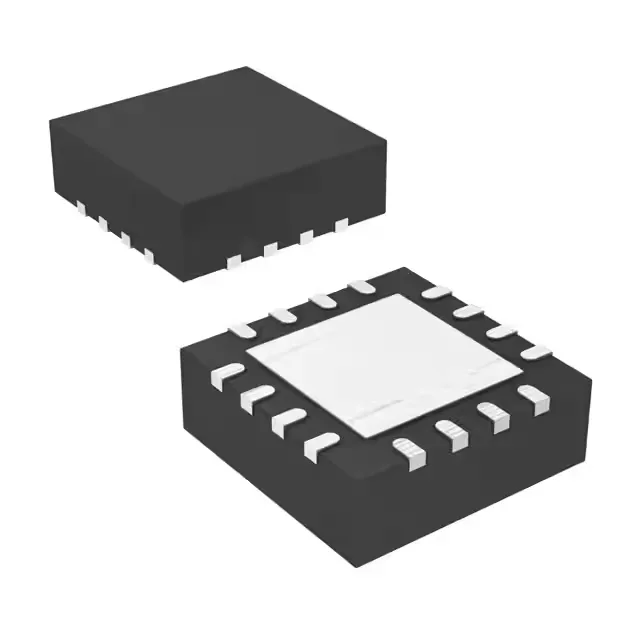
600 kHz switching and the 16-QFN package
The 600 kHz switching frequency is a middle-ground choice — high enough to keep the inductor and output capacitor physically small for a portable PCB, but not so high that switching losses dominate the efficiency curve.
It belongs in outdoor instrumentation, automotive cabin electronics, portable medical devices, and industrial sensor nodes that see a cold start or a hot enclosure. The 85°C ceiling is the ambient limit, not the junction — the 2 A switch generates its own heat, so the actual output current at 85°C ambient will be lower than at 25°C unless the board copper pulls enough heat away.