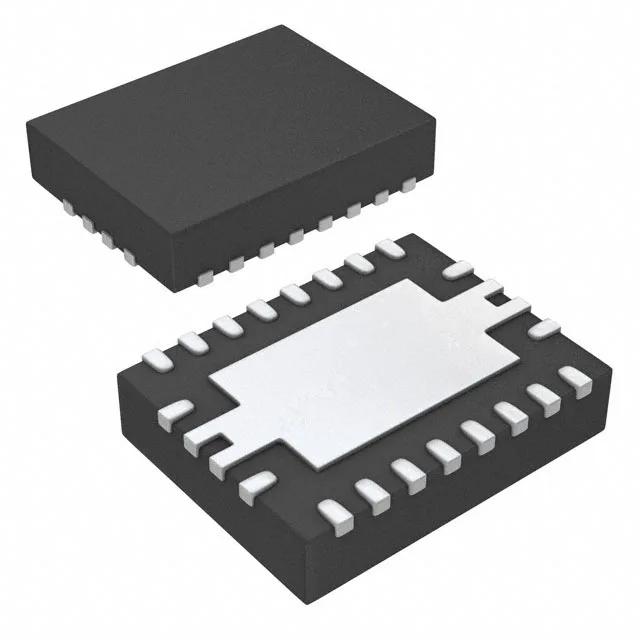
Texas Instruments TPS61088QRHLTQ1 — Power Management (PMIC / Gate Driver)

TPS61088QRHLTQ1 Boost Converter, 10 A, AEC-Q100, 20-VQFN

MPNTPS61088QRHLTQ1
Active

Texas Instruments TPS61088QRHLTQ1, Automotive AEC-Q100, Step-Up Boost Converter, Adjustable Output, 10 A Output Current, 20-VFQFN Exposed Pad, -40°C to 125°C.

$6.9500Ref. price · indicative, final on quote
Packaging20-VFQFN Exposed Pad
RoHSROHS3 Compliant
SeriesAutomotive, AEC-Q100
Independent supplier — new & surplus stockAuthenticity-screened · ESD-safe packingListing updated Aug 2026

Specifications

TPS61088QRHLTQ1 specifications
ParameterValue
SeriesAutomotive, AEC-Q100
Output typeAdjustable
MountingSurface Mount
Voltage - input2.7V
Voltage - output12.6V
Voltage - output (Min (Fixed))4.5V
Output current10A
Frequency200kHz ~ 2.2MHz
I/O channels1
Operating temperature-40°C ~ 125°C (TJ)
PackageTape & Reel (TR) Cut Tape (CT)
FunctionStep-Up
TopologyBoost
Case20-VFQFN Exposed Pad
Output configurationPositive
Synchronous rectifierYes

Product details

Boost converter for high-current automotive rails

Output is adjustable from 4.5 V up to 12.6 V. The wide switching frequency range — 200 kHz to 2.2 MHz — lets you trade off inductor size against efficiency, and the synchronous rectifier keeps the bill of materials lean by eliminating the external Schottky diode.

The 10 A output rating puts this part in the high-current boost class — think pre-boost for automotive audio amplifiers, USB-C power delivery, or multi-cell LED headlamp strings. At those currents the inductor saturation rating and the PCB copper pour width become the next constraint; the datasheet's typical application circuits are a good starting layout. The 12.6 V output ceiling covers 12 V nominal systems with headroom for load-dump transients.

Active lifecycle, ROHS3 compliant

Product status is Active, so no last-time-buy or end-of-life pressure on this BOM line. ROHS3 compliant — no exemptions to track.

Frequently asked questions

Will TPS61088QRHLTQ1 drop into a panel specified around LMR33630APCQRNXRQ1 without rewiring?

No. The LMR33630APCQRNXRQ1 is a step-down (buck) converter, while the TPS61088QRHLTQ1 is a step-up (boost) regulator. Their topologies are opposite — the pinouts, inductor placement, and feedback network are fundamentally different. A board designed for the LMR33630 would need a complete re-layout to accept a boost converter.