3.2A switch, AEC-Q100 — what drives the BOM decision
The TPS61087QDRCRQ1 is a Texas Instruments automotive-grade boost converter with a 3.2A integrated switch, qualified to AEC-Q100. It steps up from a 2.5V to 6V input rail to an adjustable output up to 18.5V, making it a fit for automotive power supplies that need to generate a higher-voltage bus from a regulated 3.3V or 5V supply — for example, biasing an automotive display backlight or powering a sensor module from the car battery.
650 kHz or 1.2 MHz — the inductor trade-off
The switching frequency is pin-selectable between 650 kHz and 1.2 MHz. At 650 kHz you get better efficiency at higher input voltages and heavier loads, but the inductor needs to be larger to handle the ripple current. At 1.2 MHz the inductor shrinks — good for a compact 10-VSON layout — but switching losses rise and the duty-cycle range narrows. The part does not use synchronous rectification, so the external Schottky diode's forward drop and thermal rating need to be sized for the peak switch current.
125°C operating range — under-hood ready
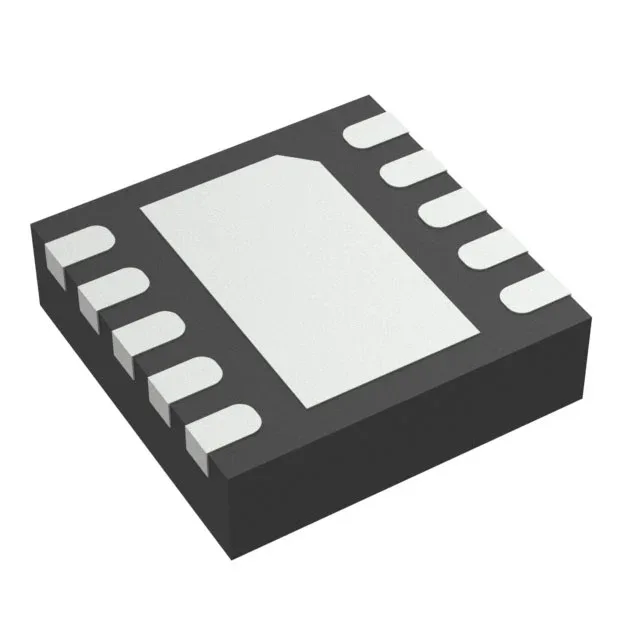
The 10-VSON package with exposed pad (3x3 mm) needs a good thermal via pattern to the ground plane to keep the junction temperature within the 125°C ceiling at the full 3.2A switch current.
The base product number TPS61087 covers the non-automotive TPS61087DRCR variant, which is pin-compatible but lacks the AEC-Q100 qualification. For a BOM that requires automotive-grade parts, the QDRCRQ1 is the version to lock in.