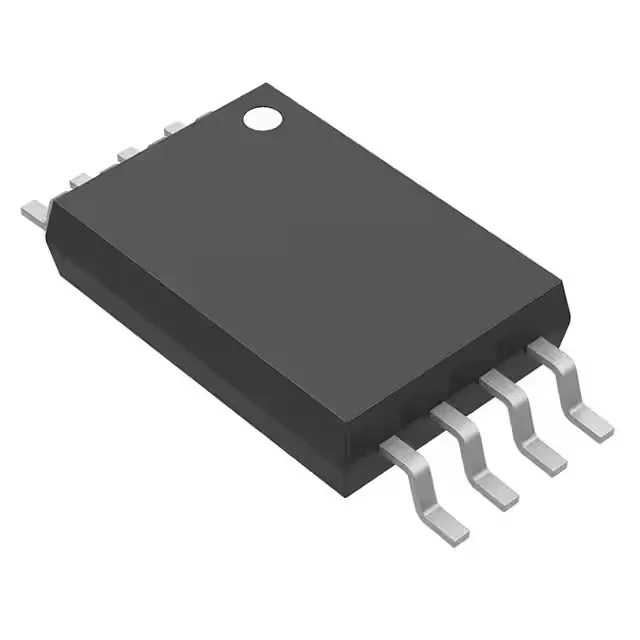
Boost converter with a 2 A switch and dual-frequency option
The Texas Instruments TPS61085PWG4 is a non-synchronous step-up (boost) DC-DC converter built around a 2 A internal switch. It accepts an input from 2.3 V to 6 V and delivers an adjustable output from 2.8 V up to 18.5 V — a range that covers Li-ion battery rails, 5 V USB supplies, and 12 V intermediate buses from a single part. A pin-strap selects between 650 kHz and 1.2 MHz switching frequency. The lower frequency favours higher efficiency and a wider inductor choice; the higher frequency shrinks the inductor footprint at the cost of slightly higher switching losses. This is the first decision the designer makes — it sets the inductor value, the output capacitor ripple, and the layout loop area.
Non-synchronous topology — budget the external diode
The TPS61085 is a non-synchronous boost (no synchronous rectifier), so an external Schottky diode is required between the switch pin and the output. The diode's forward voltage drop adds to the conduction loss — at 2 A switch current a 0.45 V Schottky dissipates nearly 1 W, which the diode package must sink. The buyer should pair this with a diode rated for the output voltage plus a healthy derating margin. The single-output positive-configuration regulator uses current-mode control for fast line and load transient response. No external compensation network is needed — the internal loop is stable over the full output range with the recommended output capacitor ESR window.
It is not specified for under-hood or extended-temperature downhole environments, but the -40°C low end covers cold-start conditions in outdoor enclosures and engine-bay-adjacent compartments. For the 2 A switch current, a 2-layer board with adequate ground-plane copper is sufficient; a 4-layer board with thermal vias improves heat spreading if the ambient temperature approaches the 85°C ceiling.
The buyer can commit this BOM line without qualification-change exposure for the foreseeable production horizon. Sourced through independent distribution.