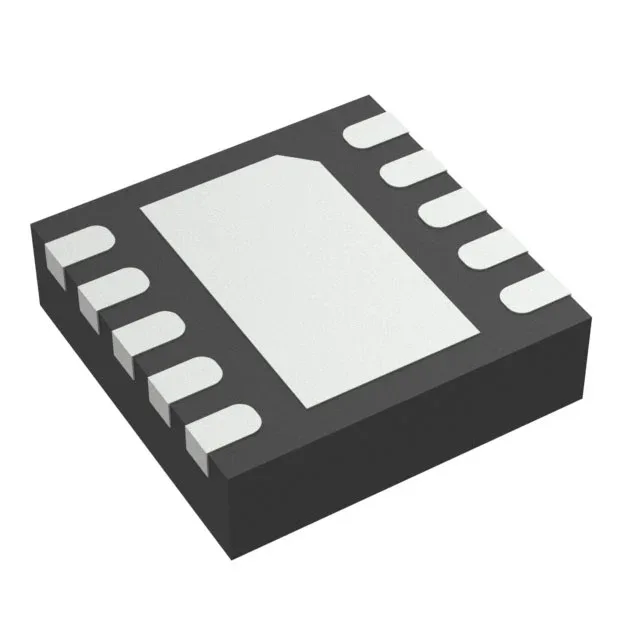
Fixed 5V rail from a single cell
The TPS61026DRCR is a synchronous boost converter from Texas Instruments that delivers a regulated fixed 5V output from an input as low as 0.9V. It is designed for battery-powered equipment — think single-cell Li-ion, two- or three-cell alkaline, or USB-powered peripherals that need a clean 5V rail for sensors, logic, or small motors. The 1.8A switch current rating sets the practical output power ceiling: at 5V out, you can draw roughly 900 mA to 1 A continuous before the switch current limit is hit, depending on input voltage and efficiency.
600 kHz switching and synchronous rectification
Switching at 600 kHz keeps the inductor and output capacitor physically small — a 4.7 µH to 10 µH shielded inductor and a 10 µF ceramic output cap are typical. The synchronous rectifier replaces the usual Schottky catch diode, which improves efficiency at light loads by several percent compared to a non-synchronous boost. For a battery-powered device spending most of its time in standby or low-power mode, that efficiency gain directly extends shelf life or run time between charges.
Package and thermal layout
For a 5V output at 500 mA load from a 3.3V input, the power dissipation is modest, but at higher loads or lower input voltages the thermal pad becomes essential — a layout that skips the thermal vias under the pad will hit the thermal shutdown threshold sooner.
For dual-sourcing, a designer would need to evaluate other synchronous boost converters in the same 10-VSON footprint with a fixed 5V output and 1.8A switch rating.