What the 36V input ceiling means for your rail
The TPS5450DDAR accepts a 5.5V to 36V input range, making it a direct fit for 12V and 24V industrial buses where transients can spike above the nominal rail. The 36V absolute maximum is the hard ceiling — the upstream supply should be clamped below that, not just at the nominal voltage. Output is adjustable from 1.221V up to 31.32V, so the same BOM position can serve a 3.3V logic rail, a 5V peripheral bus, or a 12V actuator supply by swapping two feedback resistors.
Switching at 500 kHz — inductor size vs. loss trade
The 500 kHz switching frequency is a deliberate middle ground: it lets you use a physically smaller inductor than a 100 kHz part would need, without pushing into the MHz range where gate-drive losses and layout sensitivity climb. For a 5A output, expect a 10–22 µH inductor in the BOM, which keeps the board footprint manageable. The part does not use synchronous rectification, so the freewheeling diode is external — a Schottky with adequate voltage margin. That external diode adds a conduction loss term but simplifies the compensation loop and avoids shoot-through concerns.
Active production — no end-of-life scramble
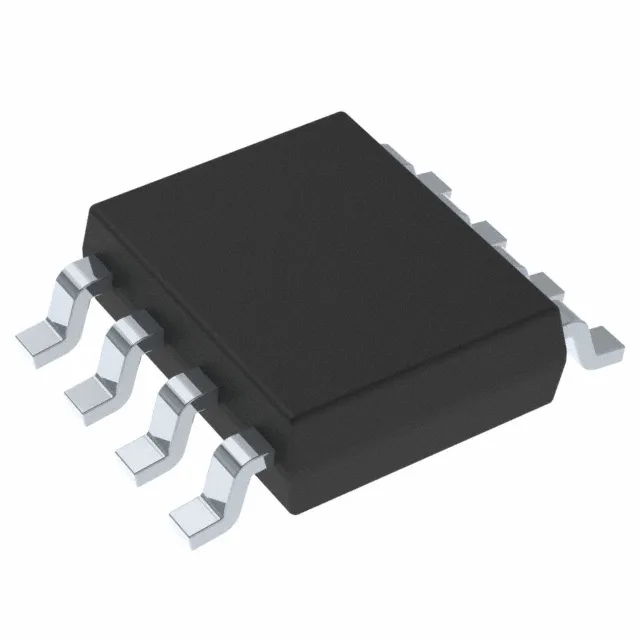
Package and footprint — 8-PowerSOIC with PowerPad
The TPS5450DDAR comes in an 8-PowerSOIC package (0.154", 3.90mm width) with an exposed thermal pad.