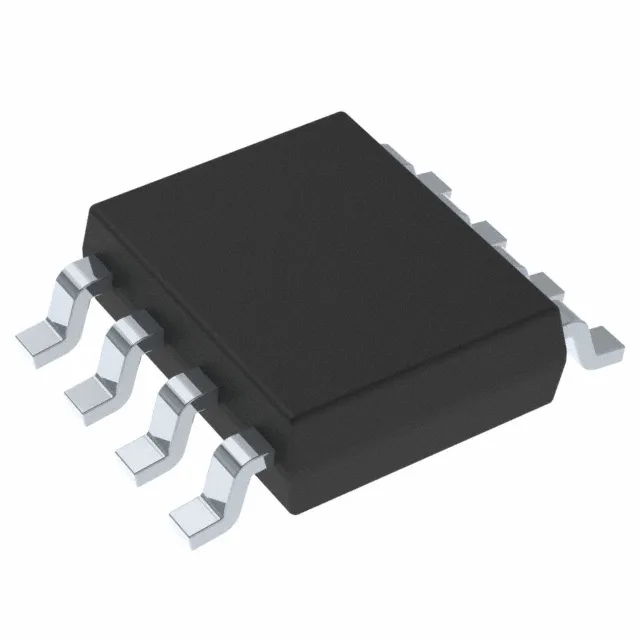
Texas Instruments TPS54360DDA — Power Management (PMIC / Gate Driver)

TI TPS54360DDA Step-Down Regulator, 60V, 3.5A, NRND

MPNTPS54360DDA
NRND

Texas Instruments Eco-Mode™ TPS54360DDA, step-down (buck) regulator, 4.5V to 60V input, adjustable output from 0.8V to 58.8V, 3.5A output, 100kHz to 2.5MHz switching frequency, 8-PowerSOIC with PowerPad, -40°C to 150°C junction.

$5.9300Ref. price · indicative, final on quote
Independent supplier — new & surplus stockAuthenticity-screened · ESD-safe packingListing updated Jul 2026

Specifications

TPS54360DDA specifications
ParameterValue
SeriesEco-Mode™
Output typeAdjustable
MountingSurface Mount
Voltage - input4.5V
Voltage - output58.8V
Voltage - output (Min (Fixed))0.8V
Output current3.5A
Frequency100kHz ~ 2.5MHz
I/O channels1
Operating temperature-40°C~150°C(TJ)
PackageTube
FunctionStep-Down
TopologyBuck, Split Rail
Case8-PowerSOIC (0.154\", 3.90mm Width)
Output configurationPositive
Synchronous rectifierNo

Product details

This means TI will continue to support existing designs for a period, but the part should not be selected for new projects. For ongoing production, confirm the last-time-buy window and evaluate a pin-compatible successor within the same family.

60V input, 3.5A output — industrial and automotive power rail fit

With a 4.5V to 60V input range and 3.5A continuous output, this buck regulator suits 12V, 24V, and 48V industrial buses as well as automotive systems that must survive load-dump transients up to 60V. The adjustable output from 0.8V to 58.8V covers common logic and analog rails.

Switching frequency flexibility

Lower frequencies maximize efficiency at heavy loads; higher frequencies shrink the inductor and output capacitor footprint. The wide range lets the designer trade off efficiency against board area without changing the regulator IC.

Thermal performance with PowerPad package

The 8-PowerSOIC package includes an exposed thermal pad (PowerPad) on the underside. Without adequate thermal management, the device will current-limit or shut down under sustained load.

Split-rail topology for negative output voltages

The TPS54360DDA supports a split-rail buck topology, which allows generation of a negative output voltage from a positive input rail. This is useful for bipolar analog supplies or bias voltages in industrial sensor interfaces. The datasheet application section details the component values for the inverting configuration.

Frequently asked questions

Is TPS54360DDA obsolete?

TI may still supply it for existing designs, but new projects should use a recommended replacement. Availability and last-time-buy terms are confirmed at quote time.

What is the replacement for TPS54360DDA?

TI has not published a direct pin-compatible replacement for the TPS54360DDA in this evidence set. For new designs, evaluate the TPS54360DDAR (the tape-and-reel variant of the same die) or contact TI for a current-generation recommendation. Sourcing through independent distribution remains an option for legacy BOM lines.

What is the difference between TPS54360DDA and TPS54360DDAR?

The TPS54360DDA ships in a Tube; the TPS54360DDAR ships in Tape & Reel. The silicon, electrical specifications, and package are identical. Choose the DDA for hand-assembly or low-volume builds; choose the DDAR for automated pick-and-place production.

Can TPS54360DDA be used for negative voltage?

Yes. The split-rail topology allows the TPS54360DDA to generate a negative output voltage from a positive input rail. The datasheet provides an application circuit for an inverting buck-boost configuration. Confirm the output voltage and current limits for your specific negative rail requirement.

What is the operating frequency of TPS54360DDA?

The switching frequency is programmable from 100 kHz to 2.5 MHz, set by a single resistor from the RT/CLK pin to ground. The exact frequency for a given resistor value is listed in the datasheet's typical characteristics table.