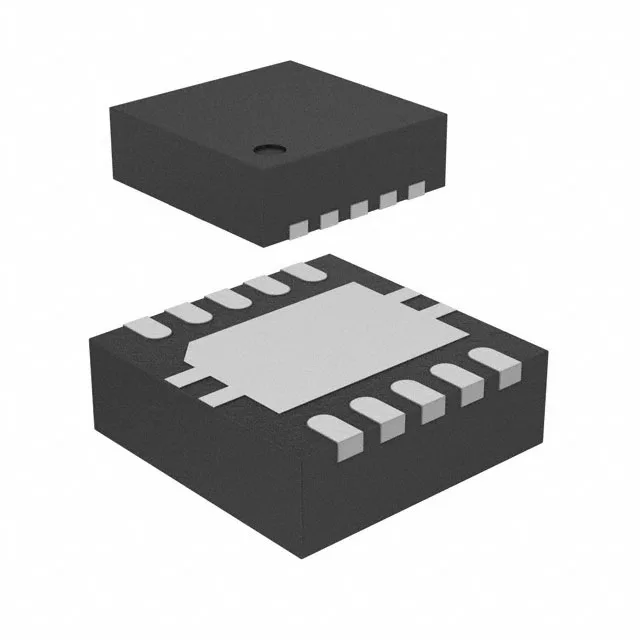
Texas Instruments TPS54336ADRCR — Discrete Semiconductors

TI TPS54336ADRCR Step-Down Regulator, 3A, 4.5V–28V

MPNTPS54336ADRCR
End of Life

Texas Instruments TPS54336ADRCR, Step-Down Buck Regulator, Adjustable Output, 3A, 4.5V–28V Input, 340kHz Switching, Synchronous Rectifier, -40°C to 85°C, 10-VSON (3x3) Exposed Pad.

$2.73Ref. price · indicative, final on quote
Packaging10-VFDFN Exposed Pad
RoHSROHS3 Compliant
Independent supplier — new & surplus stockAuthenticity-screened · ESD-safe packingListing updated Aug 2026

Specifications

TPS54336ADRCR specifications
ParameterValue
Output typeAdjustable
MountingSurface Mount
Voltage - input4.5V
Voltage - output24V
Voltage - output (Min (Fixed))0.8V
Output current3A
Frequency - switching340kHz
I/O channels1
Operating temperature-40°C ~ 85°C (TA)
PackageTape & Reel (TR); Cut Tape (CT)
FunctionStep-Down
TopologyBuck
Case10-VFDFN Exposed Pad
Output configurationPositive
Synchronous rectifierYes

Product details

3A synchronous buck in a 3×3 VSON

Switching at 340 kHz, the part balances inductor size against switching losses.

It is not AEC-Q100 qualified, so it is not the pick for under-hood or chassis-mounted automotive designs — for that, the LMR33630APCQRNXRQ1 (AEC-Q100, -40°C to 125°C junction) is a closer fit, though it switches at 2.1 MHz and requires a different inductor selection.

Sourcing posture

For a BOM freeze, this part is a clean line item — no PCN risk from an impending EOL.

Frequently asked questions

Does TPS54336ADRCR have a synchronous rectifier?

Yes, the TPS54336ADRCR integrates a synchronous rectifier, which improves efficiency and removes the need for an external Schottky diode.

Is TPS54336ADRCR equivalent to LMR33630APCQRNXRQ1?

They are not pin-compatible drop-in replacements. The LMR33630APCQRNXRQ1 is an automotive-grade (AEC-Q100) synchronous buck with a 2.1 MHz switching frequency and a -40°C to 125°C junction temperature range, versus the TPS54336ADRCR's 340 kHz and -40°C to 85°C ambient rating. Both deliver 3A output but target different application tiers and require different inductor and compensation networks.