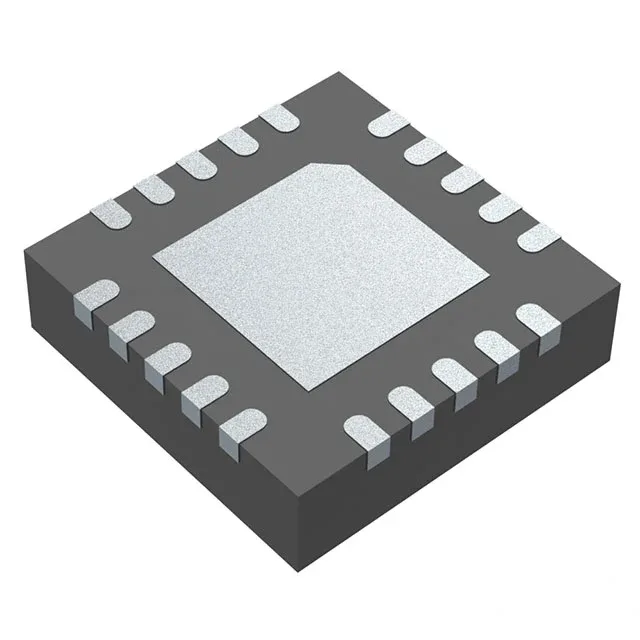
Active production, four-rail system PMIC
The TPS51285BRUKR is an active-production Texas Instruments D-CAP™ series PMIC that packs two synchronous buck controllers and two linear LDO regulators into a single 20-WFQFN package. Its 5V to 24V input range covers common system rails from a 5V USB supply up through a 19V laptop adapter, making it a natural fit for multi-rail embedded designs that need both high-current switched rails and a clean analog supply.
What the four outputs actually do for your BOM
Two of the four outputs are controller-only — they drive external MOSFETs for the buck converters, so the actual output current depends on your FET and inductor choice. The other two are integrated LDOs: one fixed at 3.3V delivering 100mA, the other is a general-purpose linear regulator. This split means the part handles the main system rail (buck), a core or I/O rail (second buck), and two small analog or standby rails (LDOs) without separate LDO ICs. Switching frequency is set to 400kHz on one controller and 475kHz on the other — close enough that a single inductor family can serve both, but offset enough to spread the switching harmonics and reduce input filter ripple. The D-CAP™ control scheme gives fast transient response without external compensation components, which saves two or three passives per rail compared to a traditional voltage-mode buck.
Package, temperature, and layout notes
The 20-WFQFN with exposed pad (3x3mm body, 0.5mm pitch) demands a solid thermal via pattern under the pad to pull heat into the ground plane. The -40°C to 85°C operating range covers industrial enclosures and outdoor telecom gear but stops short of automotive under-hood temperatures. ROHS3 compliance means no exemptions for lead in solder — standard reflow profiles apply.
Sourcing and availability
It is supplied in Tape & Reel (TR) or Cut Tape (CT) options. For volume BOM positions, the part is quoted to order through independent distribution — availability and current pricing are confirmed at RFQ time. No pin-compatible second source is listed in the TI D-CAP™ family, so the BOM should treat this as a single-source line item.