2.93V threshold — the rail it watches
That 2.93V threshold is the trip point for a 3.3V rail — if your processor or FPGA core runs from 3.3V, this part catches a brownout before the logic glitches.
120 ms minimum reset timeout — what it buys you
The reset output stays low for at least 120 ms after the supply recovers above the threshold. That window gives the downstream MCU, FPGA, or SoC time to complete its internal power-on reset sequence before the reset pin releases. If your processor needs a longer hold time, you add an external capacitor to the MR pin on the TPS382x family — but the 120 ms minimum covers most 32-bit ARM and RISC-V cores out of the box.
Push-pull output — no pull-up resistor needed
The output is push-pull, totem pole, active low. That means the reset pin is driven both high and low — you do not need an external pull-up resistor to VDD. The output sinks or sources enough current to drive the reset input of most logic families directly. If your design uses an open-drain reset from another supervisor, this part is a drop-in replacement as long as the host reset input is active low.
SOT-23-5 footprint — board area and layout
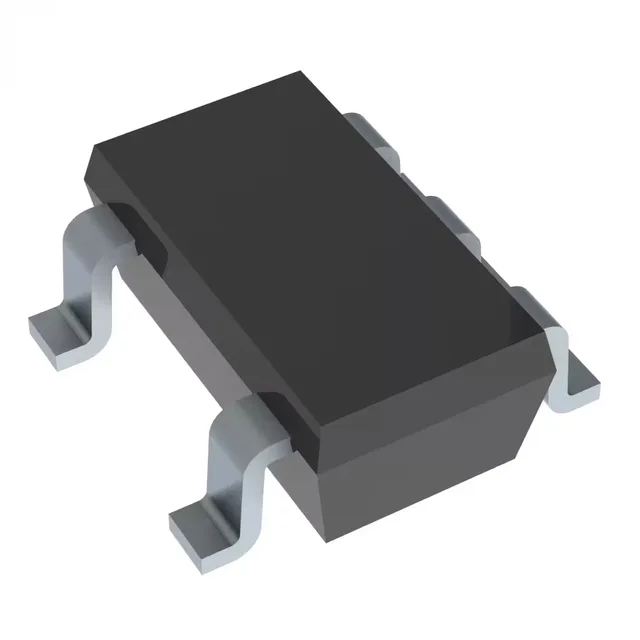
Housed in a SOT-23-5 package (SC-74A, SOT-753), the part occupies about 3 mm × 3 mm of board area. The 0.95 mm pin pitch is wide enough for a two-layer PCB with basic routing. The small footprint makes it suitable for space-constrained designs like sensor modules, portable instruments, and industrial control I/O cards.