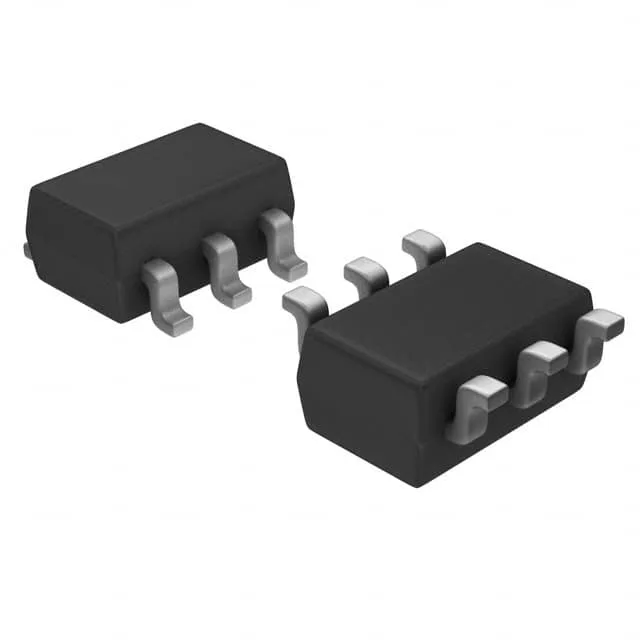
Automotive-grade supervisor for 3.3V rails
It monitors a single 3.3V supply rail with a 3.07V threshold and asserts an active-low, open-drain reset output when the rail drops below that level. The reset timeout is adjustable via an external capacitor, giving the designer control over the brown-out recovery delay.
3.07V threshold — what it means for 3.3V system supervision
The 3.07V threshold is set to trip at roughly 93% of a nominal 3.3V rail. This provides enough margin to catch a brown-out before the downstream logic (typically specified down to 3.0V or 2.97V) enters an undefined state. For a 3.3V MCU or FPGA bank, this threshold ensures the reset asserts while the rail is still within the device's valid operating window, preventing metastable behaviour on power-down or transient dips.
Adjustable reset timeout — setting the recovery delay
The reset timeout is adjustable/selectable via a single external capacitor connected to the CT pin. This allows the designer to tailor the delay between the rail returning above the threshold and the reset de-asserting. The datasheet provides a formula relating capacitance to timeout period.
This covers the full automotive temperature envelope, including under-hood and engine-bay locations where ambient temperatures can exceed 105°C. The AEC-Q100 qualification adds the reliability screening (high-temperature operating life, temperature cycling, moisture sensitivity) required for production automotive ECUs.