2.93V threshold — the trip point that decides the BOM fit
That 2.93V threshold is the exact trip point for a nominal 3.3V rail — it triggers before the downstream logic enters an undefined state, but stays above the minimum operating voltage of most 3.3V devices. The push-pull output drives the reset line without needing an external pull-up resistor, which saves one component per rail on the BOM.
120ms reset timeout — long enough for rail settling, short enough for fast boot
That window is long enough for the power supply to reach regulation after power-up, and long enough to cover most brown-out recovery events. It is short enough that a microcontroller with a typical 16 MHz crystal will be out of reset and executing code before the user notices any delay. If the system needs a longer delay to sequence multiple rails, this part alone won't provide it — the 120ms is fixed, not adjustable.
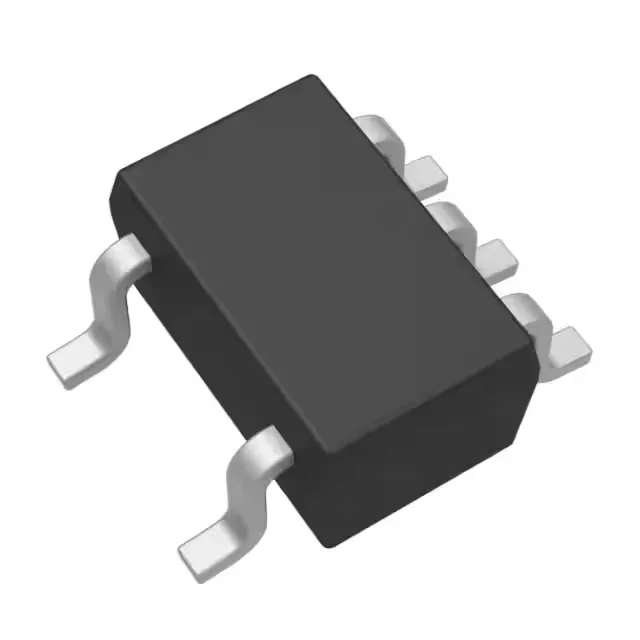
SC-70-5 footprint — the board layout constraint
The part comes in a 5-pin SC-70 package (also known as SOT-353). The 0.65mm pin pitch is standard for this class of supervisor, but the small body means the copper pad area under the package is limited — the thermal dissipation is through the pins, not a pad. For most 3.3V rail monitoring applications drawing under 50 µA, the package handles the thermal load without issue.
The base product number TPS3801 covers a family of threshold voltage options in the same package, so if the 2.93V threshold is correct for the rail, this exact variant is the one to qualify.