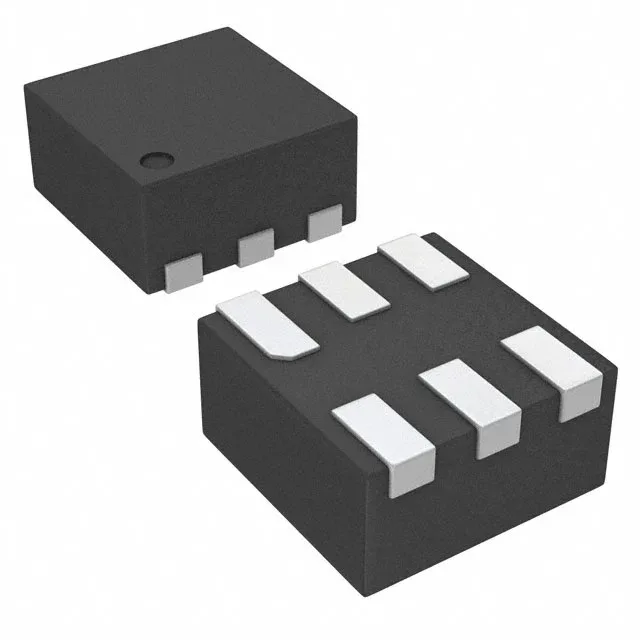
What this 1.8V monitor does for an automotive rail
It watches a single 1.8V rail and asserts an active-low, open-drain reset output when the voltage drops below the threshold, then releases it after a 140ms minimum timeout once the rail recovers. That 140ms window is long enough to let a switching regulator finish its startup sequence without false resets, but short enough that the system doesn't sit idle waiting for the core to boot. That covers under-hood and engine-bay environments where ambient temperatures can push silicon well past 85°C.
For a production program that needs multi-year supply stability — typical for automotive platforms that run five to seven years — this part doesn't introduce obsolescence risk. The base product number is TPS3703, so future threshold variants (1.2V, 3.3V, adjustable) share the same footprint and pinout across the family, making a last-minute threshold change a board-spin-free swap.
Open-drain output — shared reset bus or wired-OR
The open-drain output lets multiple supervisors share a common reset line through a single pull-up resistor. That's useful in multi-rail systems where each voltage gets its own monitor but the system needs one global reset signal. The active-low polarity is the industry standard for microcontroller reset inputs — no inversion logic needed between this monitor and the MCU's RESET pin.