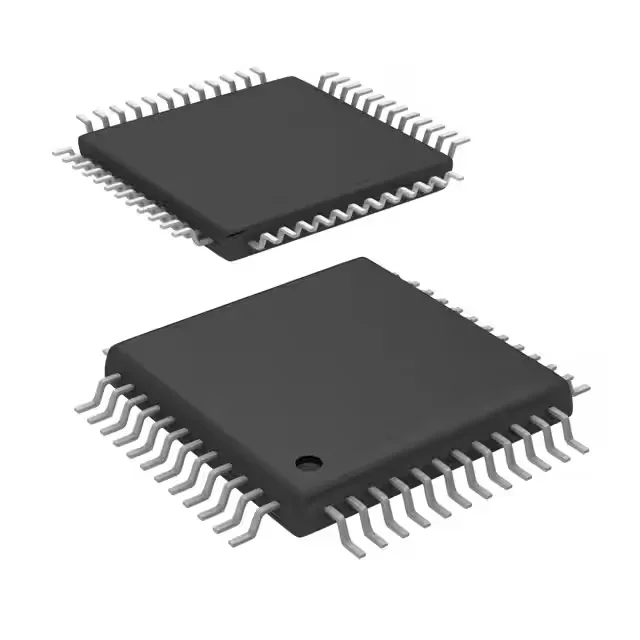
Six-channel hot swap for PCIe slots
The TPS2363PFBR is a six-channel hot plug controller from Texas Instruments, purpose-built for PCI Express add-in card and backplane slot management. It integrates both the high-side and low-side switches internally — the 'Both' internal switch configuration means the controller handles the full power sequencing path without external MOSFETs, saving board area and reducing BOM count on multi-slot designs.
Dual supply rails and what they power
The part operates from two independent supply domains: a 3 V to 3.6 V rail for the control logic and SMBus interface, and a 10.8 V to 13.2 V rail for the gate drive and internal switch bias. The 3.3 V rail matches the PCIe auxiliary power plane; the 12 V rail lines up with the standard PCIe slot power bus, so the controller can sequence the 3.3 Vaux and 12 V main supplies independently per channel.
Programmable inrush and fault handling
Three programmable features — current limit, fault timeout, and slew rate — let the designer tailor the turn-on profile to the downstream load capacitance. The slew rate control ramps the output voltage gradually, preventing the PCIe slot from seeing a current surge that would trip the upstream power supply. Latched fault behaviour means the controller shuts off and stays off after an overcurrent event, requiring a power cycle or enable toggle to retry — a deliberate choice for fault-isolated slots where a glitching card should not cycle the whole backplane.
Package and rework reality
The pad needs a soldered connection to the ground plane for both thermal relief and electrical contact — a missing or voided solder joint under the pad will lift the die temperature by 15-20 °C under load. Rework is straightforward with hot air: preheat the board to 125 °C, hit the package body at 260 °C nozzle temp until the solder reflows, then lift with tweezers. The pad array is fully visible, so alignment after rework is easy with a microscope. Orientation mark is a chamfered corner on the package body — pin 1 is the corner opposite the chamfer.
Active production and compliance
It is RoHS3 compliant (lead-free per EU 2015/863).