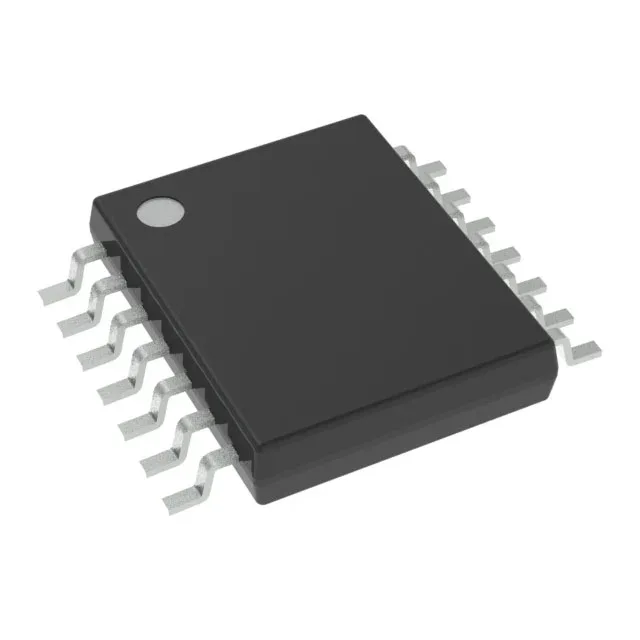
What this controller does on the board
The TPS2330IPWR is a single-channel hot swap controller that manages inrush current when a board is plugged into a live backplane. It does not contain an internal pass FET — the external N-channel MOSFET is driven by the controller's gate pin, so the current rating scales with the FET you choose. Supply range is 3V to 13V, drawing 500 µA quiescent current. The undervoltage lockout (UVLO) threshold is set by external resistors; below the programmed threshold the gate stays off, preventing the FET from turning on into a brownout condition.
Programmable protection — what each feature controls
Three programmable functions are available: circuit breaker threshold, fault timeout, and slew rate. The circuit breaker compares the voltage across the sense resistor to an internal reference — when the drop exceeds the threshold, the controller latches off after the timeout period expires. The slew rate pin sets the gate charge current, which controls how fast the output voltage rises and therefore the peak inrush current. The latched fault behaviour means once the circuit breaker trips, the output stays off until the input supply is cycled or the enable pin is toggled. This is the expected behaviour for a backplane card that should not auto-retry into a short — the system operator clears the fault before re-inserting the card.