16 mOhm on-resistance — why it matters for the 6 A rail
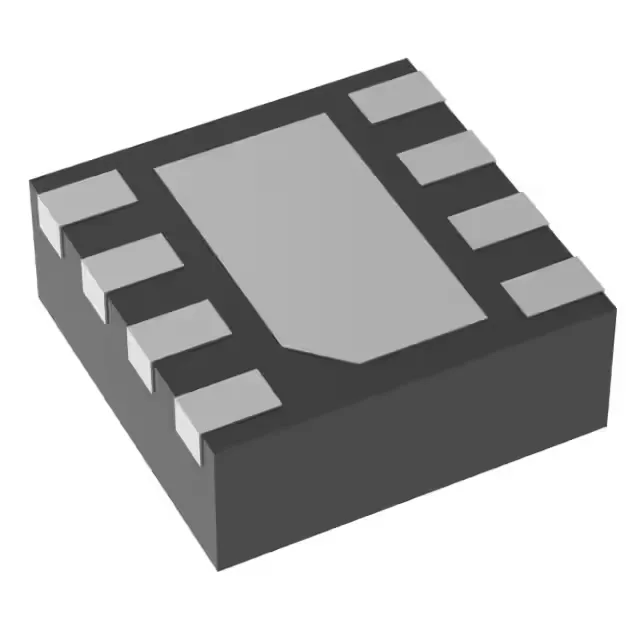
The headline number is the 16 mOhm typical on-resistance — at 6 A continuous output, that is under 0.6 W of conduction loss, which the exposed pad on the 8-WFDFN can sink without a heatsink in most layouts.
Slew rate control and load discharge — what they do on the board
Slew rate controlled turn-on limits inrush current into capacitive loads — useful when the switch feeds a bank of decoupling caps or a downstream regulator that would otherwise brown out the supply rail. The load discharge feature pulls the output to ground when the switch is off, preventing the output from floating at an indeterminate voltage that could hold a downstream IC in an undefined state.
The bias supply (Vcc/Vdd) runs from 0.8 V to 5.7 V, which means the switch can be controlled by a 1.8 V logic signal from an MCU or FPGA without a level shifter.