Load switch for tight 1V–3.6V rails
It handles a load voltage from 1V to 3.6V and delivers up to 1A continuous current. The typical on-resistance is 28.2 mOhm, which keeps conduction loss low for a 1A rail. Two integrated features set it apart from a basic pass-FET: load discharge pulls the output to ground when the switch is off, preventing floating outputs, and slew rate control limits inrush current during turn-on. The control interface is a single On/Off pin.
At 1A load, the 28.2 mOhm typical Rds(on) produces about 28 mV drop and 28 mW dissipation — negligible in most designs, but worth checking against the board's thermal budget if ambient runs near the 85°C ceiling. No external Vcc supply is needed — the switch is self-powered from the load rail. The input-to-output ratio is 1:1, so the output voltage tracks the input minus the drop across the FET.
DSBGA footprint — plan the board accordingly
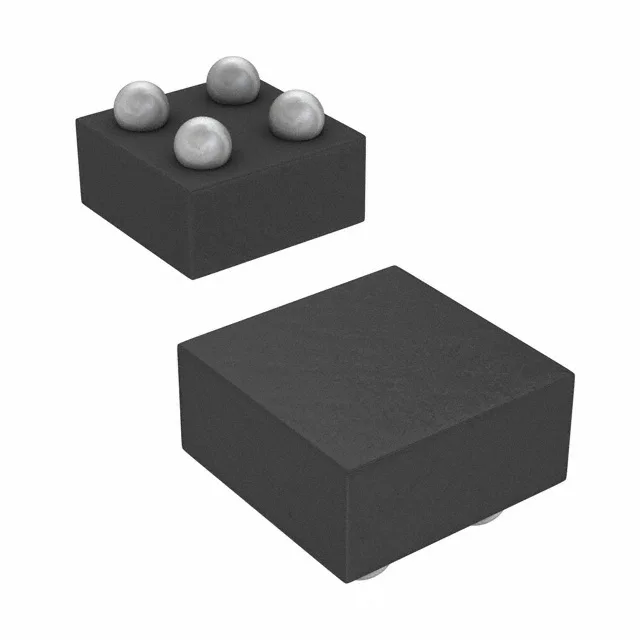
The TPS22908YZTT comes in a 4-DSBGA package measuring 0.9x0.9 mm (supplier device package 4-DSBGA). That is a tiny, leadless package with solder balls on the bottom — it requires a well-defined PCB land pattern and a controlled reflow profile. The 0.50 mm pitch is standard for this class, but the small body means the fan-out vias must be placed precisely.
For ongoing BOM lines, this part is a stable choice without imminent obsolescence risk.