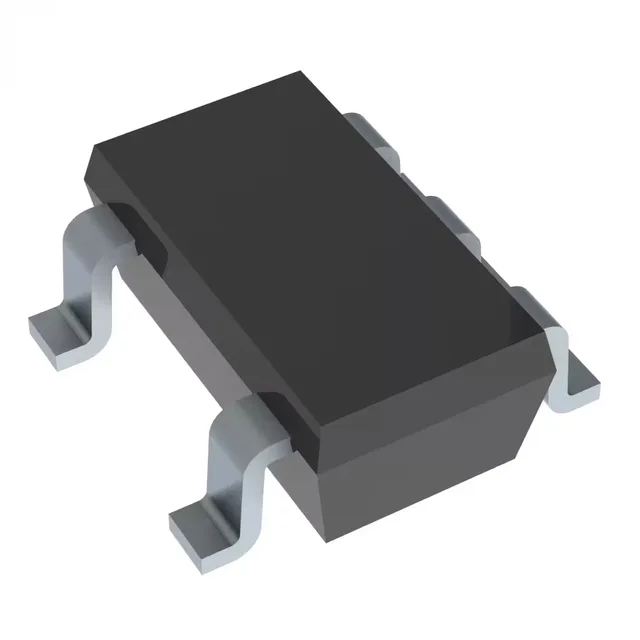
What this switch does on your board
It delivers up to 500 mA continuous output from a 2.7 V to 5.5 V supply rail, with a typical on-resistance of 95 mOhm. That low Rds(on) keeps voltage drop to a few hundred millivolts at full load, which matters when you are feeding a 3.3 V peripheral from a 3.6 V rail and cannot afford another 100 mV of loss. The switch includes fixed current limiting, over-temperature shutdown, and UVLO — the usual protection set for USB ports and general-purpose power distribution. An open-drain status flag (active low) reports overcurrent or thermal fault back to the host controller.
Where it fits — and where it doesn't
The 500 mA ceiling means it handles a single USB 2.0 downstream port, a low-power sensor node, or a relay coil — but not a motor driver or a 1 A peripheral. The input voltage range (2.7 V to 5.5 V) covers 3.3 V and 5 V rails cleanly, but not 12 V or 24 V industrial buses. If your load draws 600 mA peak, this part will current-limit and the flag will assert; you need the 1 A sibling in the same family.