What this rail-to-rail steering diode does on the board
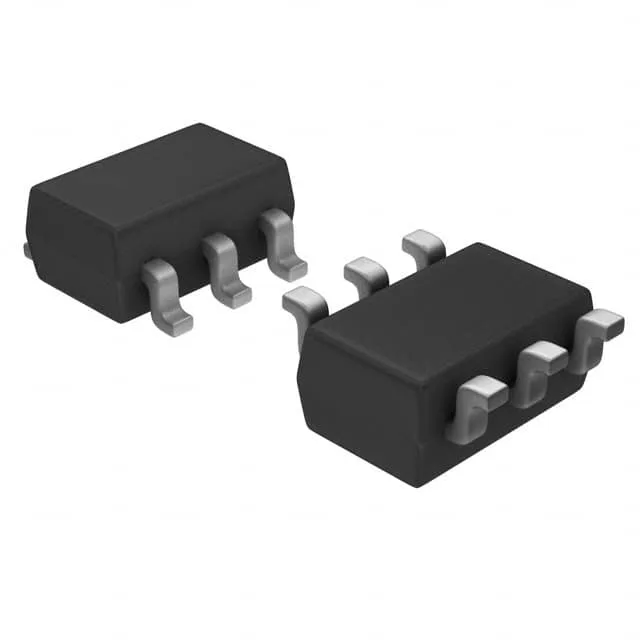
The Texas Instruments TPD4E1U06DBVR is a four-channel steering (rail-to-rail) ESD protection diode array in a SOT-23-6 package.
Clamping voltage and standoff — what they mean for signal integrity
The 5.5 V maximum reverse standoff means the diode does not conduct during normal signal swings up to that level, so HDMI and Ethernet differential pairs see no added capacitance loading. When an ESD event exceeds the 6.5 V minimum breakdown voltage, the steering diodes clamp the line to the supply rails at 15 V typical. For a 3.3 V HDMI receiver rated at 5 V absolute maximum, the 15 V clamp is above the device limit — the protection relies on the system's own supply clamping (TVS or bulk capacitance) to absorb the remaining energy. This is standard for rail-to-rail steering arrays; the trade-off is lower capacitance versus a standalone TVS diode.
Four unidirectional channels in one SOT-23-6
Four unidirectional channels in a six-pin SOT-23-6 package — the pin count is tight, so the pinout is fixed: two channels share a common ground pin, and the supply rail connects to the remaining pin. Surface-mount assembly is straightforward with standard reflow profiles for SOT-23-6.