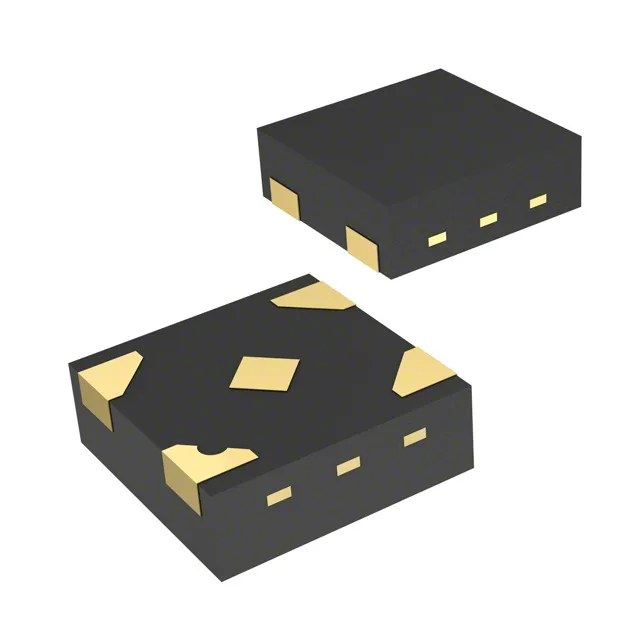
Four-channel ESD clamp in a 0.8 mm square package
The Texas Instruments TPD4E101DPWR is a Zener-type ESD protection diode array packing four bidirectional channels into a 4-X2SON package measuring just 0.8x0.8 mm. The 40 W peak pulse power and 3 A rating (8/20 µs waveform) cover the ESD strikes a typical interface sees in industrial or automotive environments, and the -40 to 125°C operating range keeps it working under the hood or on a factory floor.
What the 5.5 V standoff and 6 V breakdown mean for your rail
The 5.5 V max reverse standoff means this part will not conduct appreciable leakage on a nominal 5 V supply rail — it stays invisible until a transient pushes the line above 6 V (the minimum breakdown voltage). That 1 V window between standoff and breakdown is the trigger band: a 5 V USB or GPIO line sees no loading during normal operation, but an ESD event that drives the line past 6 V gets clamped to a typical 13 V. For 3.3 V logic the margin is even wider, so the part works there too, though the 5.5 V standoff is the headline fit.
Reworking the 4-X2SON — what to expect under the hot air
The 4-X2SON (0.8x0.8 mm) is a tiny leadless package with an exposed pad underneath. The pad layout is a single row of four lands; the exposed pad is the main thermal and electrical connection for the Zener junctions. Preheat the board to 125°C, use a fine nozzle, and keep the airflow low to avoid blowing the part off the pads. It reflows clean with a 260°C peak profile, but the small mass means it reaches temperature fast — watch the solder paste wetting and pull the heat as soon as the joint fillets form. Will it survive the hot air? Yes, but only if you have the orientation marked and the pad stencil aperture matched to the 0.8 mm body.