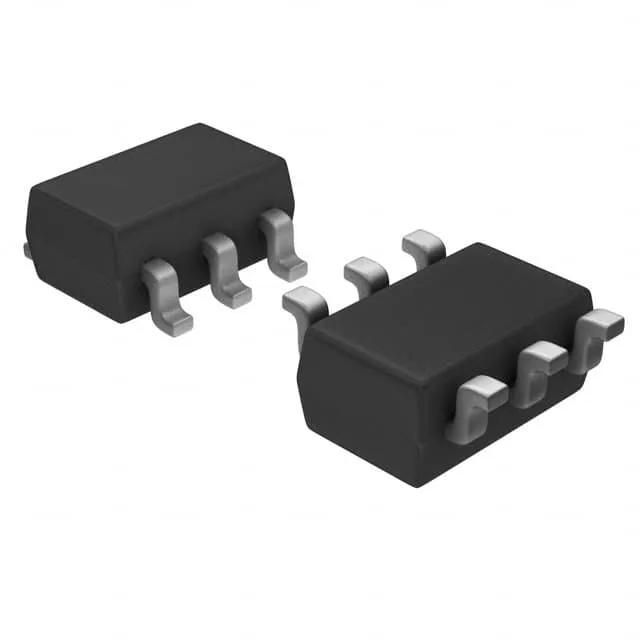
AEC-Q100 qualified rail-to-rail ESD protection in SOT-23-6
The Texas Instruments TPD4E001QDBVRQ1 is a steering (rail-to-rail) TVS diode array qualified to AEC-Q100, making it suitable for automotive-grade applications including Ethernet interfaces.
The 5.5V max reverse standoff voltage means this part will not conduct leakage current on signal lines operating up to 5.5V — suitable for 3.3V and 5V logic families, including automotive CAN, LIN, and 10/100 Ethernet PHY interfaces. The 11V minimum breakdown voltage provides a predictable trigger point, and the 16V typical clamping voltage limits the voltage seen by the protected IC during an ESD event. With 5.5A peak pulse current capability (8/20 µs), it can absorb the energy from IEC 61000-4-2 level 4 ESD strikes without damage.
Four channels, one package — board area efficiency
Four unidirectional channels in a single SOT-23-6 package saves board space compared to using four discrete TVS diodes. Each channel can protect one signal line (e.g., four data lines of an Ethernet PHY or four GPIOs). The rail-to-rail architecture steers the transient to the supply or ground rail, which means the protected IC sees only the clamping voltage above the rail. Power line protection is built in (yes), so the device can also clamp transients on the supply rail itself.