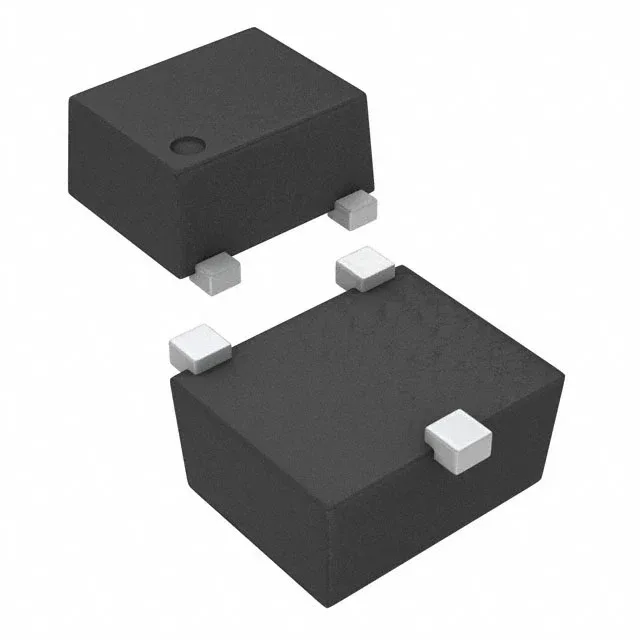
What this ESD diode does and where it goes
The Texas Instruments TPD2EUSB30DRTR is a two-channel steering (rail-to-rail) ESD protection diode array. It clamps fast transients on differential signal pairs — think USB 2.0 D+/D−, USB 3.0 SSTX/SSRX, HDMI, or LVDS lines — by steering the surge current to the supply rail and ground. Each channel is unidirectional, so the orientation matters: the cathode connects to the signal line, the anode to ground. The 5.5V max reverse standoff means it sits on 3.3V or 5V tolerant I/O without loading the bus, and the 7V minimum breakdown gives a clean snap-back before the clamp engages at 8V. At 45W peak pulse power (8/20µs waveform) it handles the energy from a standard ESD gun hit — IEC 61000-4-2 level 4 — without the part giving up.
Package and field-fit — can you swap it on site?
The TPD2EUSB30DRTR comes in a SOT-23-3 variant (TI calls it SOT-3). Three pins, one orientation notch, no thermal pad to worry about. That means you can swap it with a standard fine-tip soldering iron — no hot-air station, no preheater, no lab bench. If you are doing a field repair on a USB port that got zapped, this part goes in clean. Surface-mount only — no through-hole equivalent exists in this family.
Lifecycle and sourcing — still current, no LTB clock ticking
No last-time-buy notice, no end-of-life announcement, no NRND flag.