3W into 4Ω — what the output rating means for the load
The TPA2018D1YZFT: The 3W x 1 @ 4Ω figure is the maximum continuous output power per channel into a 4-ohm speaker load. In a portable design with a 3.7V Li-ion cell, the available output drops as the battery discharges toward 2.5V — the amplifier's supply range covers the full discharge curve, but the headroom for peak SPL narrows below 3.0V. The I²C interface controls gain, volume, and shutdown without external potentiometers or analog switches — the register map sets the gain in 0.5 dB steps from -28 dB to +30 dB, which lets the system processor tune the speaker level per application without changing BOM resistors. Differential inputs reject common-mode noise from the audio source — useful when the amplifier sits on a separate PCB from the codec or when the ground plane carries switching noise from a DC-DC converter.
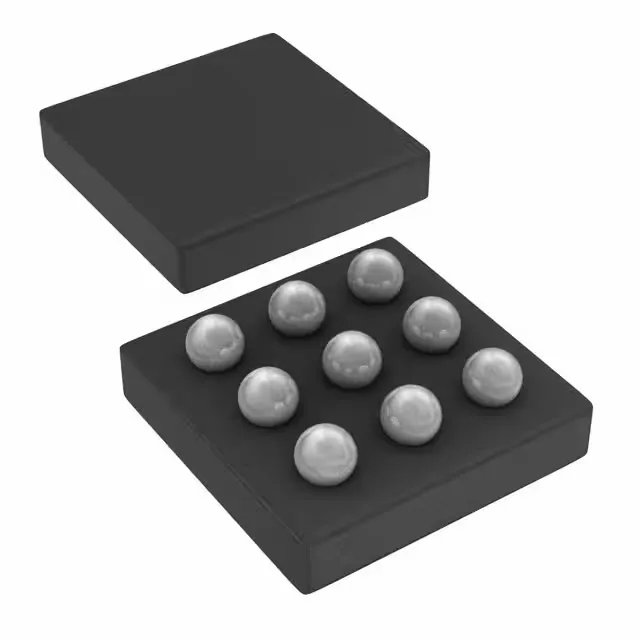
9-DSBGA — package, reflow, and board integration
The 9-DSBGA package (0.5 mm pitch, 0.9 x 1.3 mm body) has no exposed thermal pad — all heat dissipates through the solder balls into the PCB copper. Surface-mount assembly with a standard lead-free reflow profile works — the package is MSL1 per TI's standard DSBGA qualification, so no pre-bake is required if the reel is unsealed less than 168 hours before reflow.