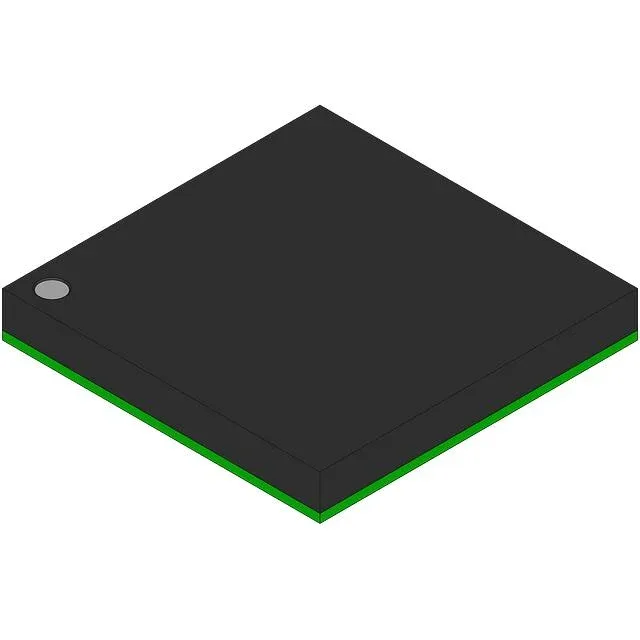
16-bit DSP core — what the part does on the board
The TMS320UC5409GGUR80 is a 16-bit fixed-point digital signal processor from Texas Instruments, built for real-time signal processing tasks like audio codec work, modem modulation/demodulation, and motor-control feedback loops where the deterministic instruction cycle matters. The '80' suffix indicates an 80 MHz core clock — the instruction cycle time is 12.5 ns, which sets the sample-rate ceiling for a single-cycle MAC operation at roughly 80 million multiply-accumulates per second, assuming zero wait-state memory access.
Active lifecycle — no EOL watch needed
The RoHS compliance status is non-compliant. This means the part contains lead in the solder balls or die-attach material above the 0.1 % threshold. For EU markets under RoHS exemption 7(c)-I (lead in electronic ceramic parts) or for military/aerospace builds that are exempt from RoHS, this is acceptable. For a standard commercial RoHS-required line, a pin-compatible lead-free variant would need substitution — but no such variant is recorded in this evidence set.
Bulk packaging — what it means for the pick-and-place line
The TMS320UC5409GGUR80 ships in Bulk (tubes or trays), not tape-and-reel. For a high-volume line running 8 mm or 12 mm tape feeders, this means a tube feeder or tray shaker is required, or the parts must be re-reeleld by a third-party service before the pick-and-place head can handle them. The 80 MHz core clock and 16-bit data bus mean the package is likely a 100-pin or 144-pin LQFP or BGA — a fine-pitch device that demands a flat, non-warped tray to avoid tombstoning during reflow. Check the moisture sensitivity level before the bake decision. A DSP in a fine-pitch BGA or LQFP typically carries MSL 3 or 4 — if the floor life at 30 °C / 60 % RH has been exceeded, a 48-hour bake at 125 °C is needed before reflow to prevent popcorning. The evidence does not list the MSL rating, so confirm it from the TI product folder before committing the part to the oven.