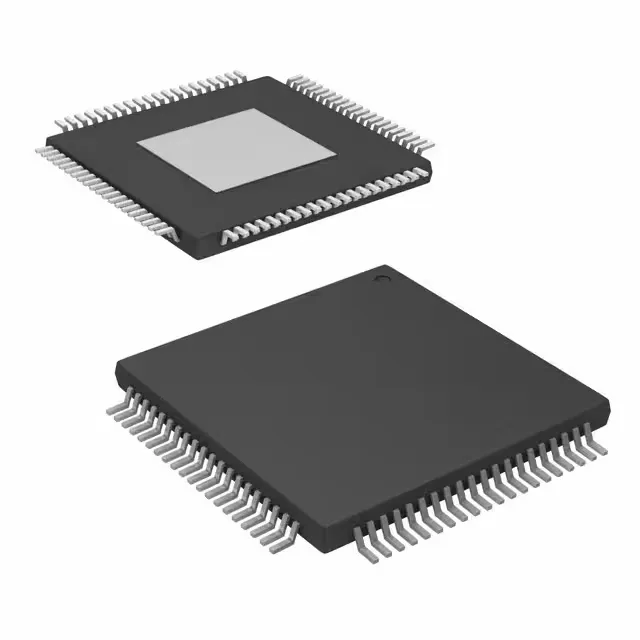
Texas Instruments TMS320F28062PFPQR — Microcontrollers & Processors (MCU / MPU / DSP)

TMS320F28062PFPQR C2000 Piccolo MCU, 90MHz, AEC-Q100

MPNTMS320F28062PFPQR
Active

Texas Instruments C2000 C28x Piccolo series, TMS320F28062PFPQR, 32-bit single-core MCU, 90MHz, 128KB (64K x 16) FLASH, 26K x 16 RAM, CAN/I²C/SPI/UART, 40 I/O, -40°C to 125°C, 80-TQFP Exposed Pad, Tape & Reel.

$11.7849Ref. price · indicative, final on quote
Independent supplier — new & surplus stockAuthenticity-screened · ESD-safe packingListing updated Jul 2026

Specifications

TMS320F28062PFPQR specifications
ParameterValue
SeriesAutomotive, AEC-Q100, C2000™ C28x Piccolo™
MountingSurface Mount
Oscillator typeInternal
Program memory typeFLASH
Voltage - supply (Vcc (Vdd))1.71V ~ 1.995V
Operating temperature-40°C~125°C(TA)
Speed90MHz
PackageTape & Reel (TR)
RAM size26K x 16
Core size32-Bit Single-Core
PeripheralsBrown-out Detect/Reset, DMA, POR, PWM, WDT
ConnectivityCANbus, I²C, McBSP, SCI, SPI, UART/USART
Number of i (O)40
Core processorC28x
Case80-TQFP Exposed Pad
Data convertersA/D 12x12b
Program memory size128KB (64K x 16)

Product details

C28x Piccolo for automotive and industrial motor control

The part carries AEC-Q100 automotive qualification, so it is rated for under-hood and chassis-domain environments where the ambient hits 125°C.

90 MHz and the PWM update rate

At 90 MHz the C28x core can close a current-control loop at 50 kHz or higher without breaking a sweat. The on-chip PWM peripheral (part of the ePWM module) runs from the same clock, so you get high-resolution edge placement for three-phase motor drives and switched-mode power supplies. The 12-bit ADC banks (12 channels total) sample synchronously with the PWM, which is the standard pattern for field-oriented control.

Automotive-grade silicon, not just commercial

The AEC-Q100 stamp means this part went through the full automotive qualification flow: extended temperature cycling, high-temperature operating life, and latch-up testing.

Peripheral mix for CAN-based networks

This MCU includes a CANbus controller, multiple SPI and SCI (UART) ports, plus I²C and McBSP. The CAN node is essential for automotive body and powertrain networks. The 40 general-purpose I/O pins are enough to interface with external sensors, gate drivers, and position encoders without an I/O expander.

Package and thermal: the exposed pad matters

Without it, the junction temperature climbs fast above 400 mA continuous I/O current or when the core runs full-tilt at 125°C ambient.

The base product number is TMS320, and the family includes several Flash and RAM density variants that share the same pinout.

Frequently asked questions

Is TMS320F28062PFPQR suitable for automotive motor control?

Yes. The 90 MHz C28x core and 12-channel 12-bit ADC make it a standard choice for field-oriented control of permanent-magnet and induction motors in automotive traction, steering, and pump applications.

What is the difference between TMS320F28062PFPQR and TMS320F28060?

Both are C28x Piccolo MCUs in the same 80-HTQFP package and share the same pinout. The F28062 carries 128 KB Flash and 26K x 16 RAM, while the F28060 has 64 KB Flash and 20K x 16 RAM. The F28062 also includes the CAN module, which the F28060 lacks. For motor-control applications needing CAN networking, the F28062 is the correct choice.

How to program TMS320F28062PFPQR?

The device is programmed via the JTAG or serial-wire debug interface using TI's Code Composer Studio IDE or third-party tools like IAR Embedded Workbench. The on-chip Flash is programmed through the boot ROM, which supports boot from SCI, SPI, I²C, CAN, and parallel I/O. The internal oscillator means no external crystal is required for basic operation, though an external clock can be used for tighter timing.