It outputs a ratiometric voltage proportional to the sensed current, with a sensitivity of 400 mV/A.
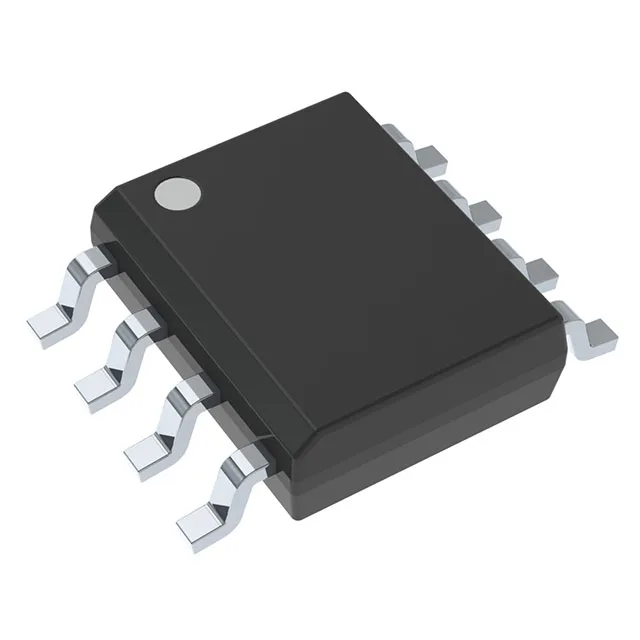
The ±5.75 A sensing range covers many automotive loads — motor windings, solenoid drivers, or battery-monitoring paths. The 400 mV/A sensitivity gives a 2.3 V full-scale output at 5.75 A with a 5 V supply, which maps cleanly into a 3.3 V or 5 V ADC input without external scaling. The 80 kHz bandwidth supports control loops and overcurrent detection with a 6.5 µs response time, fast enough for most motor-drive and power-converter fault responses. Ratiometric output means the output voltage scales with the supply voltage (4.5 V to 5.5 V), so the measurement accuracy holds even if the supply drifts — useful in automotive environments where the 5 V rail may sag during cranking. The ±0.05% linearity ensures the transfer curve stays tight across the full range, reducing the need for multi-point calibration in production. Supply current max is 6 mA, so the sensor adds negligible load to the 5 V rail. The single-channel, surface-mount 8-SOIC footprint is straightforward for hand-soldering or reflow, and the package is narrow (3.90 mm width), saving board space compared to larger through-hole Hall sensors.