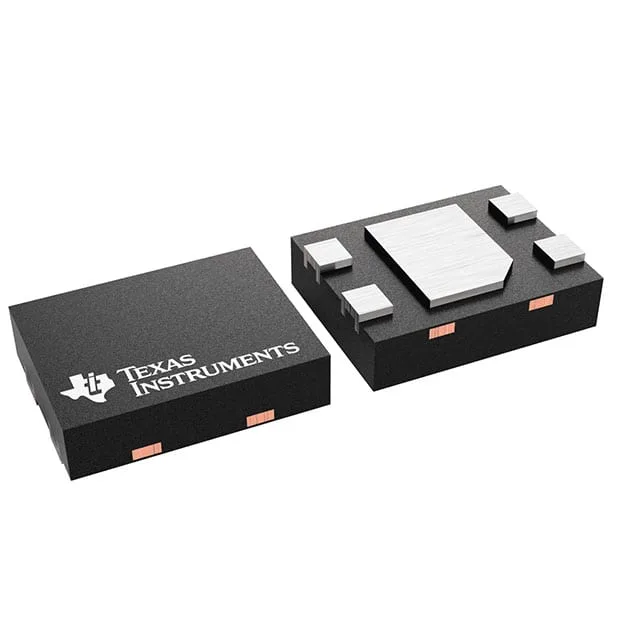
Low-voltage omnipolar Hall switch for battery-operated position sensing
The TMAG5231A1CQDMRR is a low-power, low-voltage omnipolar Hall-effect switch from Texas Instruments that detects both north and south poles with a single device.
What the trip points mean for your detection window
The switch triggers at ±2.7 mT (typical) and releases at ±0.3 mT, giving a 2.4 mT hysteresis band that prevents chatter when the magnet sits near the threshold. For a typical N35-grade neodymium magnet 3 mm in diameter, the 2.7 mT trip corresponds to an air-gap of roughly 8–10 mm — the release at 0.3 mT extends the release gap to about 20 mm, so the output stays low through a wide approach and only resets when the magnet moves well away. Because the device is omnipolar, either pole triggers the same output state — no need to track magnet orientation in the assembly. The push-pull output drives directly to the supply or ground rail without an external pull-up resistor, saving one component per sensor node.
Temperature range and deployment environments
The magnetic thresholds shift with temperature — the datasheet typical curve shows the trip point varies by roughly ±10% across the full range — so a design that closes the magnet gap by an extra 1–2 mm at room temperature holds margin at the hot end.