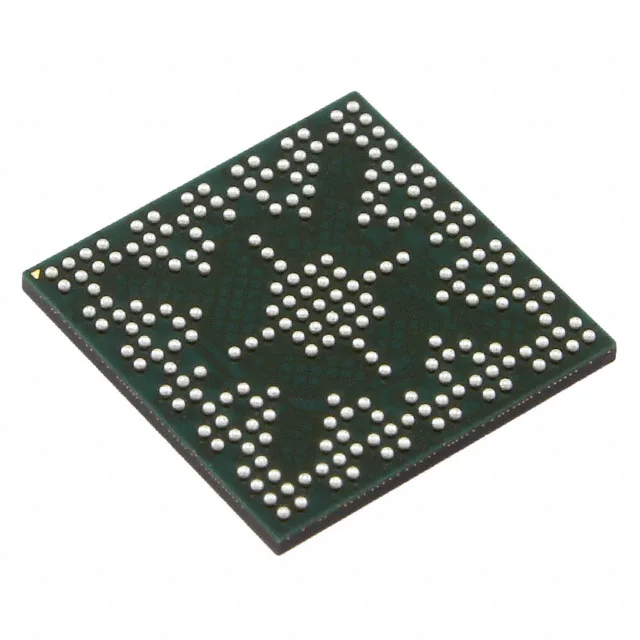
Texas Instruments TM4C129DNCZADI3R — Microcontrollers & Processors (MCU / MPU / DSP)

Texas Instruments TM4C129DNCZADI3R MCU, ARM Cortex-M4F

MPNTM4C129DNCZADI3R
Active

Texas Instruments Tiva C series TM4C129DNCZADI3R, 32-bit ARM Cortex-M4F MCU, 120 MHz, 1 MB Flash, 256 KB RAM, 6 KB EEPROM, 140 I/O, Ethernet + CAN + USB OTG, 212-NFBGA (10x10), -40 to 85°C.

$12.7201Ref. price · indicative, final on quote
Independent supplier — new & surplus stockAuthenticity-screened · ESD-safe packingListing updated Jul 2026

Specifications

TM4C129DNCZADI3R specifications
ParameterValue
SeriesTiva™ C
MountingSurface Mount
Oscillator typeInternal
Program memory typeFLASH
Voltage - supply (Vcc (Vdd))2.97V ~ 3.63V
Operating temperature-40°C~85°C(TA)
Speed120MHz
PackageTape & Reel (TR)
RAM size256K x 8
Core size32-Bit Single-Core
EEPROM size6K x 8
PeripheralsBrown-out Detect/Reset, DMA, Motion Control PWM, POR, PWM, WDT
ConnectivityCANbus, EBI/EMI, Ethernet, I²C, IrDA, QEI, SPI, SSI, UART/USART, USB OTG
Number of i (O)140
Core processorARM® Cortex®-M4F
Case212-VFBGA
Data convertersA/D 24x12b
Program memory size1MB (1M x 8)

Product details

120 MHz Cortex-M4F with integrated Ethernet MAC and dual CAN

The connectivity set is the headline feature: an internal Ethernet MAC (10/100), two CAN 2.0 controllers, and a USB OTG (Host/Device) interface coexist on the same die, alongside SSI/SPI, I²C, UART, and QEI peripherals. This makes the part a natural fit for industrial gateway panels, building automation controllers, and motor-drive HMIs where a single MCU handles both real-time control and protocol bridging. The 140 GPIOs and 24-channel 12-bit ADC provide enough mixed-signal headroom for multi-sensor acquisition and parallel actuator PWM outputs without an external FPGA or CPLD.

212-NFBGA (10x10) — board integration notes

The TM4C129DNCZADI3R is supplied in a 212-ball NFBGA package measuring 10x10 mm with a 0.5 mm ball pitch. This fine-pitch BGA requires a micro-via or HDI-capable PCB stack-up for breakout; a standard 4-layer board with through-hole vias will struggle to route all 140 I/O without adding layers. Plan for a minimum 6-layer stack with staggered or skip vias if signal integrity on the Ethernet differential pair is a concern. The supply range is 2.97 V to 3.63 V, so a single 3.3 V rail suffices. Brown-out reset and power-on reset are integrated, reducing external supervisor IC count.

Frequently asked questions

Does TM4C129DNCZADI3R support CAN and Ethernet simultaneously?

Yes. The device integrates an internal Ethernet MAC and two CAN 2.0 controllers that can operate concurrently. This allows a single MCU to bridge an industrial CAN bus to an Ethernet network without an external gateway chip.

What is the difference between TM4C129DNCZADI3R and TM4C129DNCPDTI3R?

The TM4C129DNCPDTI3R is a pin-compatible sibling in a 128-pin TQFP package (vs. the 212-ball NFBGA of the DNCZADI3R). Both share the same Cortex-M4F core, 120 MHz speed, 1 MB Flash, and 256 KB RAM, but the NFBGA variant offers 140 I/O versus the TQFP's fewer GPIOs. The BGA package also has a smaller footprint (10x10 mm) but requires a finer-pitch PCB process.