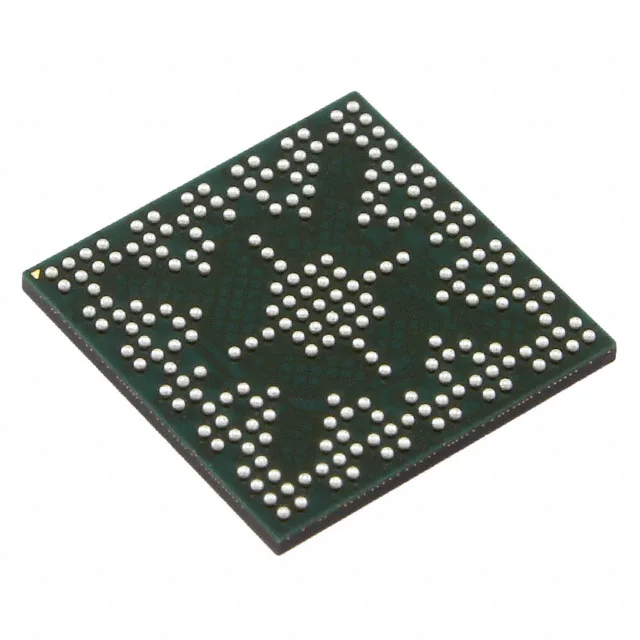
It has 1 MB Flash, 256 KB SRAM, and 6 KB EEPROM on-chip.
120 MHz Cortex-M4F — what it buys you on the bus
120 MHz core speed with a single-cycle multiply and single-precision FPU means the TM4C1294NCZADT3 can handle a closed-loop motor control algorithm, a Modbus TCP gateway, and a local HMI update all within a 1 ms control tick. The FPU offloads the filter math for current sensing or vibration analysis without cycle-count gymnastics. If your application needs deterministic Ethernet response (e.g., a PROFINET RT slave), the 120 MHz clock and the integrated Ethernet MAC with dedicated DMA keep the frame jitter low enough to pass conformance testing — no external PHY or FPGA glue required.
Memory map and field-reprogrammability
1 MB of Flash leaves room for a bootloader, a real-time OS kernel (FreeRTOS or TI-RTOS), the application code, and a small file system for configuration parameters. The 256 KB SRAM splits across multiple banks, so a double-buffered Ethernet frame buffer and a control data array can coexist without thrashing. The 6 KB EEPROM is useful for calibration constants or production counters that survive firmware updates — no external serial EEPROM needed for that role. Flash is programmed in-system via the JTAG/SWD debug interface or over USB DFU, so field updates are straightforward.