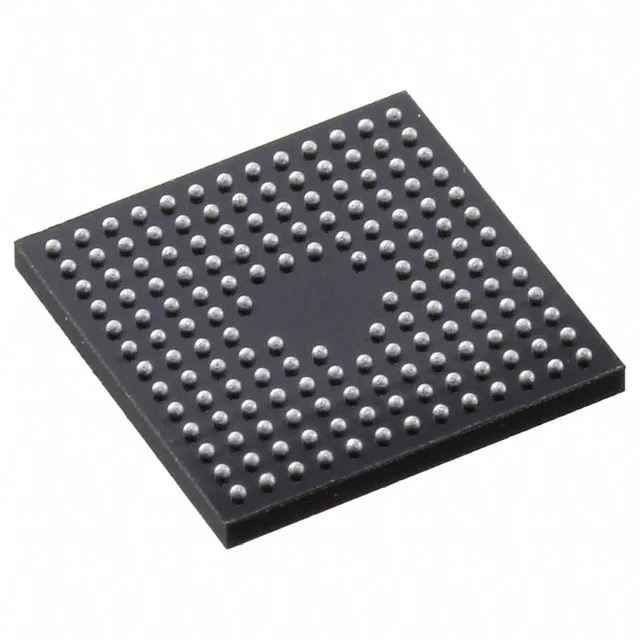
80 MHz Cortex-M4F with floating-point unit — what that means for the control loop
The TM4C123BH6ZRBI is a Texas Instruments Tiva C series ARM Cortex-M4F MCU clocked at 80 MHz, with a single-cycle multiply-accumulate and hardware floating-point unit. That FPU matters if you are running sensor fusion, motor-control observers, or any filter that would otherwise eat cycles in software emulation. The 256 KB Flash and 32 KB RAM put it in the mid-range sweet spot for a connected controller — enough for a CANopen stack plus a modest application image, not enough for a full GUI frame buffer.
Connectivity and I/O — CAN, SPI, I²C, and 120 GPIOs
This part carries CANbus, I²C, SPI, SSI, UART/USART, IrDA, Microwire, and QEI interfaces. The 120 I/O lines in a 157-VFBGA (9×9 mm) package mean you can route a fair amount of parallel bus or discrete sensor wiring without an external port expander.
EOL-hot — what it means for your BOM freeze
Temperature grade and environment — industrial range, BGA package
Rated for -40°C to 85°C ambient, this MCU fits industrial control cabinets, outdoor telecom enclosures, and automotive cabin-zone modules that do not see under-hood extremes. The 157-VFBGA (9×9 mm) package requires a controlled reflow profile and X-ray inspection for solder-joint verification — not a hand-solder part.
