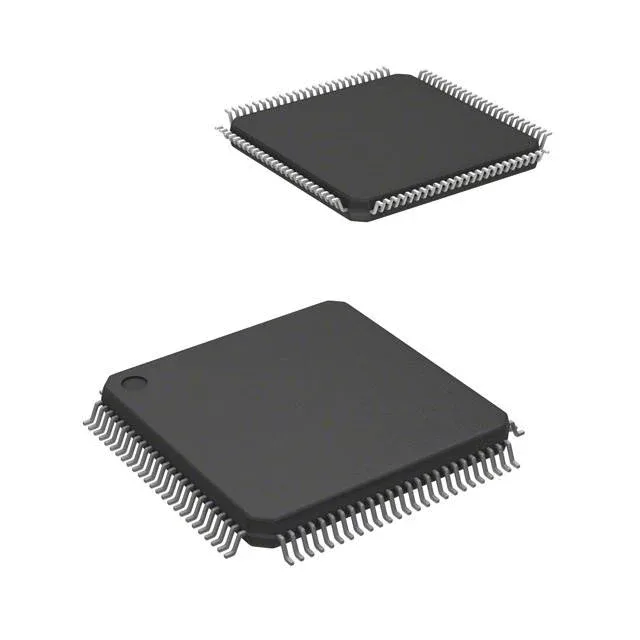
Texas Instruments TM4C1237E6PZI7 — Microcontrollers & Processors (MCU / MPU / DSP)

TM4C1237E6PZI7 Tiva C ARM Cortex-M4F MCU, 80 MHz, 128 KB Flash

MPNTM4C1237E6PZI7
Active

Texas Instruments Tiva C series TM4C1237E6PZI7, 32-bit ARM Cortex-M4F MCU, 80 MHz, 128 KB Flash, 32K x 8 RAM, 2K x 8 EEPROM, CAN, USB OTG, 100-LQFP, -40°C to 85°C.

$11.0162Ref. price · indicative, final on quote
Independent supplier — new & surplus stockAuthenticity-screened · ESD-safe packingListing updated Jul 2026

Specifications

TM4C1237E6PZI7 specifications
ParameterValue
SeriesTiva™ C
MountingSurface Mount
Oscillator typeInternal
Program memory typeFLASH
Voltage - supply (Vcc (Vdd))1.08V ~ 3.63V
Operating temperature-40°C~85°C(TA)
Speed80MHz
PackageTube
RAM size32K x 8
Core size32-Bit Single-Core
EEPROM size2K x 8
PeripheralsBrown-out Detect/Reset, DMA, POR, WDT
ConnectivityCANbus, I²C, IrDA, Microwire, SPI, SSI, UART/USART, USB OTG
Number of i (O)69
Core processorARM® Cortex®-M4F
Case100-LQFP
Data convertersA/D 22x12b
Program memory size128KB (128K x 8)

Product details

80 MHz Cortex-M4F with FPU — compute headroom for control loops

That FPU matters for sensor fusion or PID loops where you want single-cycle MAC without software emulation overhead. The 128 KB Flash and 32K x 8 RAM sit in the mid-density sweet spot — enough for a CANopen stack plus a modest application image, but not oversized for a dedicated motor-drive or I/O controller.

Connectivity and I/O — CAN, USB OTG, and 69 GPIOs

The 69 I/O lines in a 100-LQFP give you room for parallel LCD or memory interfaces alongside the serial channels. The 22-channel 12-bit ADC covers analog inputs without an external mux for most sensor arrays.

The internal oscillator and brown-out detect reduce external BOM count for reset and clock generation.

Frequently asked questions

What is TM4C1237E6PZI7's listed speed?

The core runs at 80 MHz, based on an ARM Cortex-M4F with single-precision FPU. That clock rate, combined with the FPU, gives enough compute headroom for real-time control loops and moderate signal processing without an external DSP.