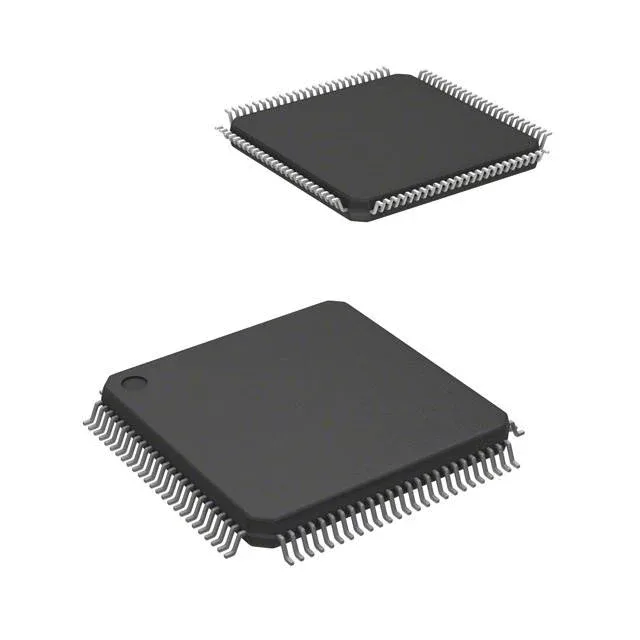
Texas Instruments TM4C1237D5PZI — Microcontrollers & Processors (MCU / MPU / DSP)

TM4C1237D5PZI Texas Instruments Tiva C ARM Cortex-M4F MCU

MPNTM4C1237D5PZI
Active

Texas Instruments Tiva™ C series TM4C1237D5PZI, 32-bit ARM Cortex-M4F MCU, 80 MHz, 64 KB Flash, 24 KB SRAM, 2 KB EEPROM, USB OTG, CAN, 100-LQFP, -40°C to 85°C.

$10.7619Ref. price · indicative, final on quote
Independent supplier — new & surplus stockAuthenticity-screened · ESD-safe packingListing updated Jul 2026

Specifications

TM4C1237D5PZI specifications
ParameterValue
SeriesTiva™ C
MountingSurface Mount
Oscillator typeInternal
Program memory typeFLASH
Voltage - supply (Vcc (Vdd))1.08V ~ 3.63V
Operating temperature-40°C~85°C(TA)
Speed80MHz
PackageTray
RAM size24K x 8
Core size32-Bit Single-Core
EEPROM size2K x 8
PeripheralsBrown-out Detect/Reset, DMA, POR, WDT
ConnectivityCANbus, I²C, IrDA, Microwire, SPI, SSI, UART/USART, USB OTG
Number of i (O)69
Core processorARM® Cortex®-M4F
Case100-LQFP
Data convertersA/D 22x12b
Program memory size64KB (64K x 8)

Product details

The Texas Instruments TM4C1237D5PZI is a Tiva™ C series 32-bit ARM Cortex-M4F microcontroller. The 80 MHz core includes a single-precision floating-point unit, which offloads math-heavy control loops and sensor fusion algorithms from software emulation. The 100-LQFP package brings out 69 I/O pins.

Connectivity and analog — one chip for industrial node control

That mix lets a single part handle both local sensor polling (over SPI or I²C) and upstream communication over CAN or USB without an external bridge. The 22-channel 12-bit ADC covers analog inputs like thermocouples, potentiometers, or current-sense resistors. Internal oscillator and brown-out reset reduce external BOM count.

Frequently asked questions

Does TM4C1237D5PZI have USB?

Yes.

How to program TM4C1237D5PZI?

The MCU boots from internal Flash and supports JTAG/SWD debug via the standard Cortex-M4F debug port. Texas Instruments provides the TivaWare software library and the Code Composer Studio IDE for development. The internal oscillator lets the chip run without an external crystal for basic operation.

What is the difference between TM4C1237D5PZI and TM4C123GH6PZ?

Both share the same 100-LQFP footprint, 80 MHz Cortex-M4F core, USB OTG, and CAN interfaces. The GH6 variant is the part to pick when the firmware image or data buffer exceeds the D5's memory ceiling.