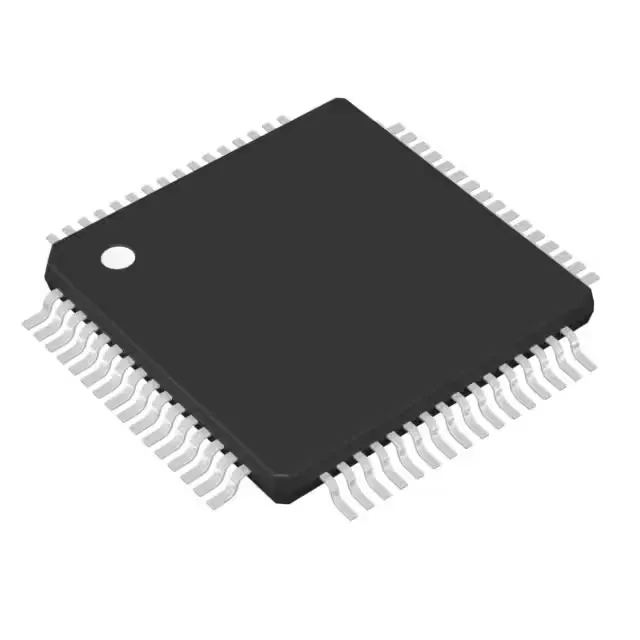
Texas Instruments TM4C1236D5PMI — Microcontrollers & Processors (MCU / MPU / DSP)

TM4C1236D5PMI Tiva C ARM Cortex-M4F MCU, 80 MHz, 64 KB Flash

MPNTM4C1236D5PMI
Active

Texas Instruments Tiva C series, ARM Cortex-M4F, 32-bit MCU, TM4C1236D5PMI, 80 MHz, 64 KB Flash, 24K x 8 RAM, 2K x 8 EEPROM, CAN, USB OTG, 64-LQFP, -40 to 85 °C.

$10.0226Ref. price · indicative, final on quote
Independent supplier — new & surplus stockAuthenticity-screened · ESD-safe packingListing updated Jul 2026

Specifications

TM4C1236D5PMI specifications
ParameterValue
SeriesTiva™ C
MountingSurface Mount
Oscillator typeInternal
Program memory typeFLASH
Voltage - supply (Vcc (Vdd))1.08V ~ 3.63V
Operating temperature-40°C~85°C(TA)
Speed80MHz
PackageTray
RAM size24K x 8
Core size32-Bit Single-Core
EEPROM size2K x 8
PeripheralsBrown-out Detect/Reset, DMA, POR, WDT
ConnectivityCANbus, I²C, IrDA, Microwire, SPI, SSI, UART/USART, USB OTG
Number of i (O)49
Core processorARM® Cortex®-M4F
Case64-LQFP
Data convertersA/D 12x12b
Program memory size64KB (64K x 8)

Product details

ARM Cortex-M4F at 80 MHz — what the core clock buys you

The floating-point unit on the M4F core handles single-precision math without software emulation — useful for sensor fusion or motor-current loops where a division or trig step would stall a Cortex-M3. 64 KB of Flash and 24K x 8 of SRAM fit a single-axis servo profile or a CAN gateway node; the 2K x 8 EEPROM stores calibration constants without wearing the Flash. Connectivity includes CAN, USB OTG, I²C, SPI, SSI, and UART, so it bridges between a fieldbus backbone and a local sensor cluster.

EOL hot — sourcing reality for this MCU

Peripherals and I/O

49 general-purpose I/O lines are available, along with a 12-channel 12-bit ADC.

Frequently asked questions

What is TM4C1236D5PMI's core speed?

The ARM Cortex-M4F core runs at 80 MHz, with a floating-point unit for single-precision math.

What interfaces does TM4C1236D5PMI support?

It includes CAN, I²C, IrDA, Microwire, SPI, SSI, UART/USART, and USB OTG — enough to bridge a CAN fieldbus to a local sensor cluster or a USB host.