ARM Cortex-M4F at 80 MHz — what the core speed buys you
The TM4C1231H6PGEIR runs a single ARM Cortex-M4F core at 80 MHz with a hardware floating-point unit. That FPU is the difference between a control loop that finishes in 12 µs and one that drags to 40 µs with software emulation — so if your design does sensor fusion, motor FOC, or audio filtering, this core saves you a separate DSP or a higher-tier MCU.
105 I/O and 24-channel ADC — board-level integration
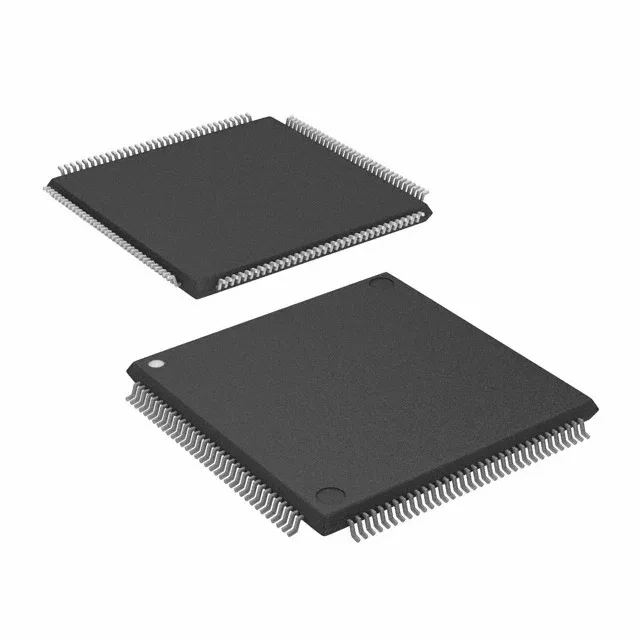
With 105 GPIOs and a 24-channel 12-bit ADC, this MCU can read a dozen analog sensors and drive a parallel LCD or a keypad matrix without external muxes. The ADC channels are multiplexed onto a single SAR core, so sequential sampling adds a per-channel acquisition delay — plan your scan order if you need simultaneous readings. The 144-LQFP (20x20 mm) footprint is a hand-solderable QFP, not a BGA, which simplifies rework during prototyping and low-volume production.
Industrial temperature range and active lifecycle
The lifecycle status is Active.
On-chip connectivity includes CAN, I²C, SPI, SSI, UART, and IrDA — enough for a CANopen node with a UART debug port and an SPI sensor bus. The internal oscillator and brown-out detect reduce external BOM count; a POR and WDT are integrated for safety-critical sequencing. The 2 KB EEPROM stores calibration constants or boot flags without wearing the Flash.