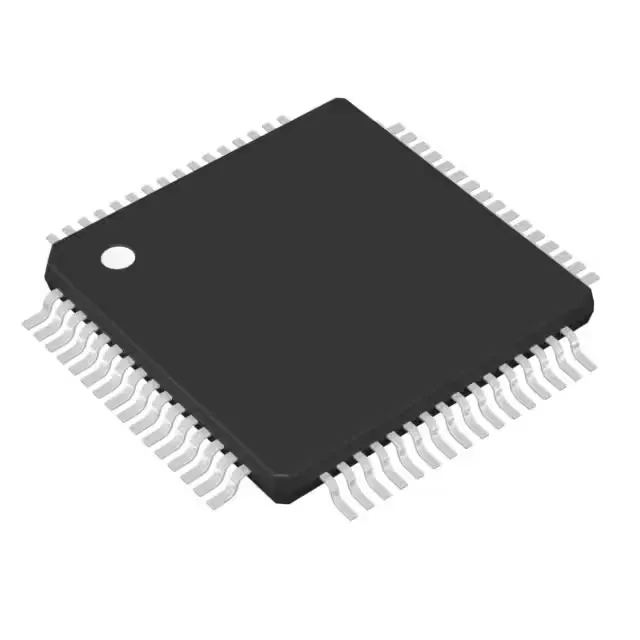
Texas Instruments TM4C1230D5PMI7R — Microcontrollers & Processors (MCU / MPU / DSP)

TM4C1230D5PMI7R Texas Instruments Tiva C MCU, 80 MHz

MPNTM4C1230D5PMI7R
Active

Texas Instruments Tiva™ C series, ARM® Cortex®-M4F 32-bit MCU, 80 MHz, 64 KB Flash, 24 KB RAM, 2 KB EEPROM, CAN/I²C/SPI/UART, -40 to 85°C, 64-LQFP.

$5.1759Ref. price · indicative, final on quote
Sourced new & surplus through independent channelsAuthenticity-screened · ESD-safe packingListing updated Jul 2026

Specifications

TM4C1230D5PMI7R specifications
ParameterValue
SeriesTiva™ C
MountingSurface Mount
Oscillator typeInternal
Program memory typeFLASH
Voltage - supply (Vcc (Vdd))1.08V ~ 3.63V
Operating temperature-40°C~85°C(TA)
Speed80MHz
PackageTape & Reel (TR)
RAM size24K x 8
Core size32-Bit Single-Core
EEPROM size2K x 8
PeripheralsBrown-out Detect/Reset, DMA, POR, WDT
ConnectivityCANbus, I²C, IrDA, Microwire, SPI, SSI, UART/USART
Number of i (O)49
Core processorARM® Cortex®-M4F
Case64-LQFP
Data convertersA/D 12x12b
Program memory size64KB (64K x 8)

Product details

The TM4C1230D5PMI7R: ARM Cortex-M4F FPU at 80 MHz handles PID loops and sensor fusion without software emulation. 64 KB Flash and 24 KB RAM suit a CAN gateway or motor-control node. 2 KB EEPROM stores calibration constants on-chip.

Twelve 12-bit ADC channels handle analog feedback from sensors or potentiometers.

64-LQFP — footprint and routing notes

The 49 I/O lines give enough headroom for a parallel LCD data bus, a bank of opto-isolated inputs, and the serial interfaces simultaneously.

For a BOM planner, this removes the urgency to stockpile or qualify a drop-in replacement. The TM4C1230 base number covers a range of Flash and RAM options in the same 64-LQFP footprint, so a density upgrade (e.g., to the 256 KB variant) is a pin-compatible move if firmware grows.

Frequently asked questions

What development boards support TM4C1230D5PMI7R?

Texas Instruments' Tiva C Series LaunchPad (EK-TM4C123GXL) uses a higher-density member of the same TM4C123x family but shares the same Cortex-M4F core and peripheral architecture. Code developed on that board ports with minor memory-map adjustments. The programming interface is JTAG/SWD via the standard 10-pin Cortex debug connector.