What this op-amp does on your board
The 4.5 V to 40 V supply range means it can run off a 5 V logic rail or a 24 V industrial bus without a secondary regulator.
With a 1 MHz gain-bandwidth product, this op-amp maintains a closed-loop gain of 10 up to about 100 kHz — enough for audio, thermocouple amplification, or filtering in a motor-drive feedback loop. If your signal chain needs faster settling, the TLV9351IDCKR (3.5 MHz GBW, 20 V/µs slew rate) is a drop-in alternative in the same SOT-23-5 footprint.
Supply voltage range and rail-to-rail output
The rail-to-rail output stage delivers 60 mA per channel, letting it drive ADC inputs, small relays, or LED indicators directly. Input offset voltage is 2.5 mV typical, adequate for non-precision sensing; if you need lower offset, the TLV9351IDCKR offers 350 µV typical.
Temperature range and package rework
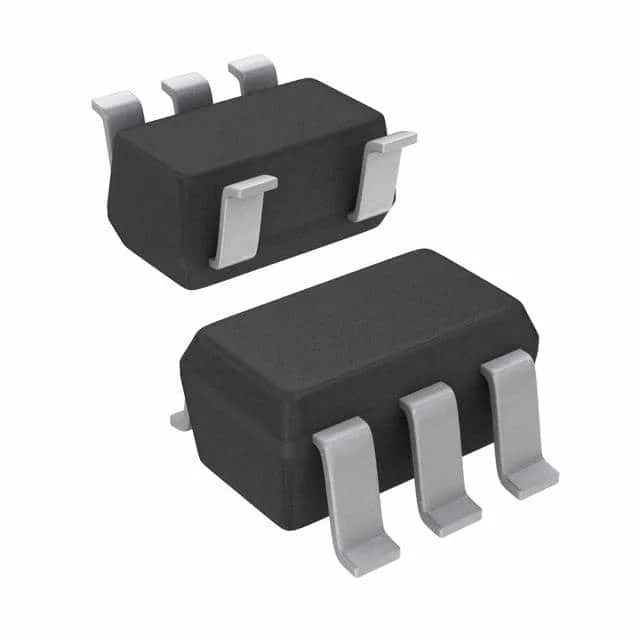
The SOT-23-5 package is a five-pin footprint — easy to hand-solder or rework with hot air. The small thermal mass means it reflows quickly; just watch the pad stencil aperture to avoid solder bridging on the narrow leads.