100 ns propagation delay, 30 µA quiescent — what the numbers mean for your BOM
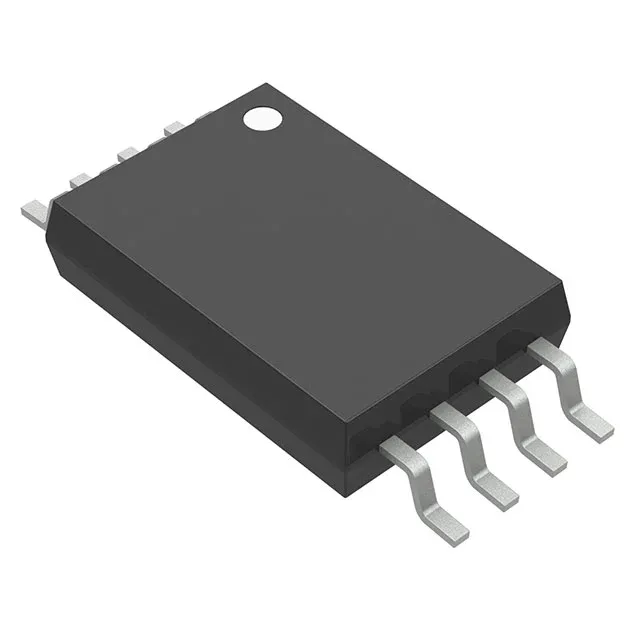
The TLV9032QPWRQ1 is a dual general-purpose comparator from Texas Instruments, automotive-grade (AEC-Q100), in an 8-TSSOP package. 100 ns maximum propagation delay means the comparator responds to an overcurrent or zero-crossing event within 100 ns — fast enough for cycle-by-cycle current limiting in a 100 kHz switching converter, but not for sub-50 ns fault detection where a high-speed comparator would be needed. Quiescent current maxes at 30 µA per channel (both channels active), so the total supply draw stays under 60 µA. For an always-on battery-monitoring circuit in a vehicle, this keeps the sleep-mode budget intact.
Automotive temperature range and AEC-Q100 qualification
AEC-Q100 qualification means it has passed the reliability stress tests (high-temperature operating life, temperature cycling, ESD) required for Tier-1 PPAP submission.
Input offset, bias current, and output drive — signal-chain fit
Input bias current maxes at 5 pA at 5 V, so high-impedance sources (10 MΩ sensor) see negligible voltage error. CMRR and PSRR are 70 dB and 95 dB respectively, meaning common-mode noise on the input lines and supply ripple are rejected well below the threshold voltage. Package is 8-TSSOP (4.40 mm width) with a 0.65 mm pitch — standard footprint for dual comparators.