2.5V fixed rail, 300mA capacity — what that means on the bench
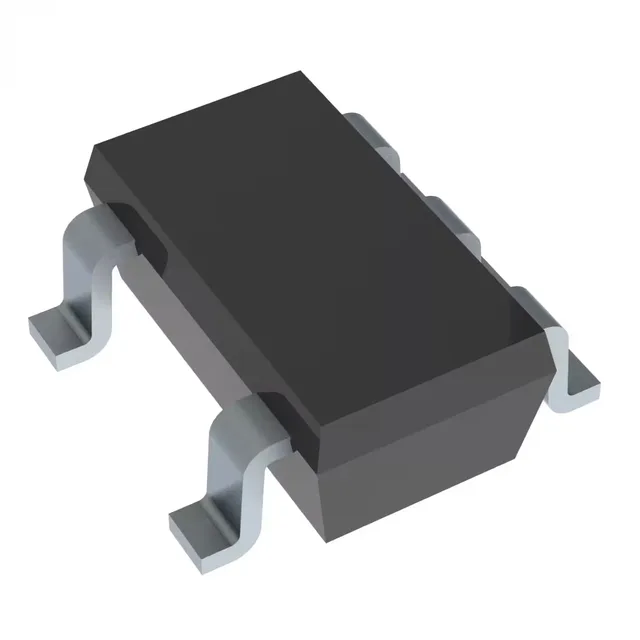
The TLV70225DBVR is a single-output positive LDO from TI's TLV702 family, delivering a fixed 2.5V at up to 300mA continuous.
Maximum dropout is 0.38V at the full 300mA load — the input rail needs to stay above 2.88V to keep the output in regulation. That 200mV headroom margin matters when the input is a 3.3V rail that sags under load. Quiescent current is 55 µA typical, with a maximum supply current of 370 µA. For a battery-powered sensor that spends most of its time in a light-load state, that Iq is low enough to not dominate the sleep budget. PSRR is 68 dB at 1 kHz — that's the rejection of upstream switching noise at typical converter frequencies. At lower frequencies the rejection is higher, but above 100 kHz it rolls off; a 2.2 µF ceramic on the output helps maintain the attenuation band.
Protection set and temperature range
Over-current, over-temperature, reverse polarity, and under-voltage lockout (UVLO) are all built in — no external supervisor needed for basic fault coverage. The UVLO threshold keeps the output off until the input is high enough to maintain regulation, which also prevents brown-out glitches on power-up. The Enable pin lets an external signal or a processor GPIO shut the rail down, dropping the supply current to near zero.