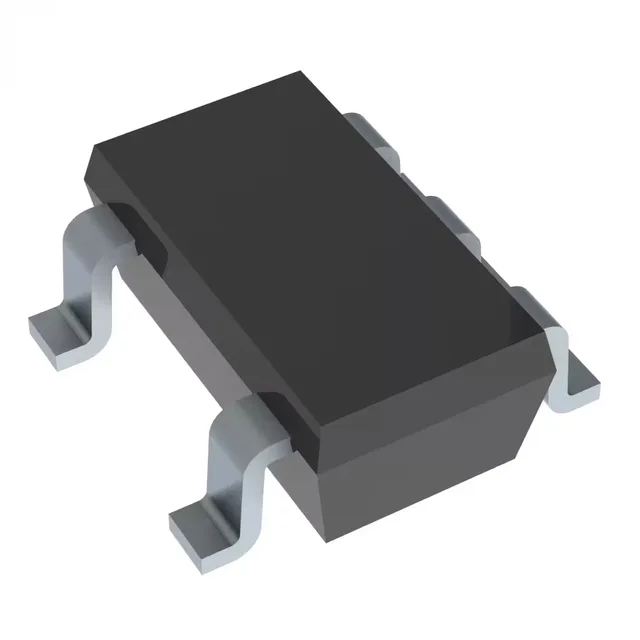
1.24 V to 6 V adjustable shunt — the low-voltage TL431 cousin
The Texas Instruments TLV431CDBVR is a low-voltage adjustable shunt regulator that covers the 1.24 V to 6 V output range — essentially the TL431's little brother for sub-2.5 V rails. Its 1.24 V internal reference lets it regulate down where a TL431 bottoms out, making it the natural fit for 1.8 V and 3.3 V supply supervision, low-voltage bias generation, and feedback loops in modern POL converters.
80 µA cathode current — why it matters for battery bias
Minimum cathode current is 80 µA, an order of magnitude lower than the TL431's 1 mA typical. In a battery-powered feedback divider or a micropower reference, that difference saves 0.9 mA of standing current — enough to extend shelf life in a coin-cell application or keep a sleep-mode supply within budget.
SOT-23-5: the fifth pin is a Kelvin sense
The TLV431CDBVR comes in a 5-pin SOT-23-5 (SC-74A) package. For a precision shunt with ±1.5% initial tolerance, that Kelvin connection recovers about half the tolerance budget that a standard three-pin shunt would lose to trace resistance.
Lifecycle status is active.