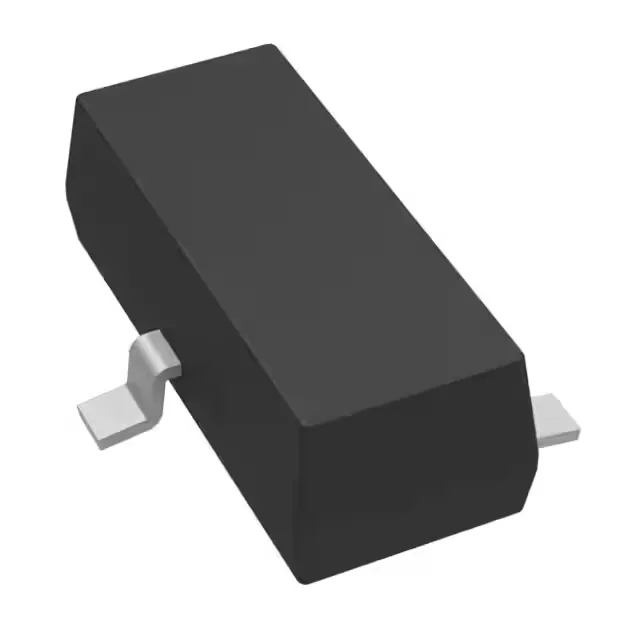
Active production, ±0.5% shunt reference in SOT-23-3
It delivers a ±0.5% tolerance on the internal 1.24 V bandgap, with the output adjustable up to 6 V via two external resistors. The part sinks up to 15 mA at the cathode and requires a minimum of 100 µA to stay in regulation.
The ±0.5% tolerance is tighter than the standard TL431's ±1% grade. In a 3.3 V rail regulation loop using a 2.5 V reference, that ±0.5% translates to roughly ±12.5 mV of initial error at the reference pin — before resistor divider tolerances. For a 5% output-accuracy budget, that leaves most of the headroom for the resistor network and the regulator's own line/load regulation. The adjustable output spans from 1.24 V (the internal bandgap) up to 6 V. The 6 V ceiling limits this part to low-voltage rails; if your design needs a 10 V reference, you step up to the TL431 family which goes to 36 V.
Shunt reference — no separate supply rail needed
As a shunt reference, the TLV431BIDBZTG4 behaves like a programmable Zener diode. It sinks current through a cathode resistor connected to the input rail; the cathode current must stay between 100 µA and 15 mA to keep the output in regulation. The resistor value is calculated from (Vin - Vref) / I_bias, where I_bias is chosen to cover the load current plus the minimum cathode current. No separate Vcc pin means one fewer trace on the board.