Why the ±0.5% tolerance matters for your reference rail
Its headline feature is a ±0.5% initial tolerance on the 1.24 V internal reference — a full grade tighter than the standard 1% grade parts. For a calibration or test-verification engineer, that tolerance is the difference between a pass and a re-spin when the reference sets the threshold for an ADC or comparator.
Output range and drive capability
It can sink up to 15 mA of cathode current, which is enough to bias an optocoupler LED in a feedback loop or set the threshold for a window comparator.
Package and thermal reality for the SOT-89-3
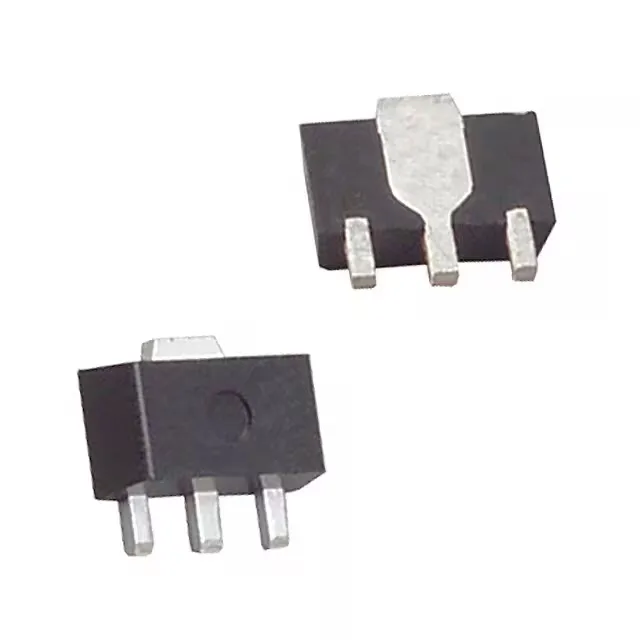
The TLV431BCPK comes in a SOT-89-3 package (TO-243AA), surface-mount with a large collector tab that improves heat transfer to the PCB. The tab is the cathode terminal, so the copper pour connected to it serves double duty as a thermal path and a low-impedance connection. For a rework or test technician, the SOT-89-3 footprint is straightforward to hand-solder or reflow, but the tab area needs a good solder joint to keep the thermal resistance low — a cold joint on the tab will shift the reference voltage under load.