Adjustable shunt reference — the bench-fit check
It acts as a low-voltage programmable zener — set the output anywhere from 1.24V up to 6V with two external resistors. The ±1% initial tolerance is tight enough for a precision comparator threshold or a secondary-side feedback loop in an isolated supply. The 15 mA cathode current rating sets the upper load the shunt can sink; the 80 µA minimum cathode current is the floor — drop below that and the part stops regulating, a common gotcha when the bias resistor is sized too large.
Output voltage range from 1.24V to 6V covers the common feedback references for 3.3V and 5V rails. The 15 mA output is the maximum cathode current — the bias resistor from the supply to the cathode must be chosen so that under worst-case load the current through the device stays below this limit, or the reference drifts. The 80 µA minimum cathode current means the resistor also has to keep at least 80 µA flowing when the load is light; otherwise the output voltage collapses. In practice, for a 5V rail feeding the reference through a 10 kΩ resistor, the current is about 380 µA — well above the floor and below the ceiling.
Package and temperature — where it fits
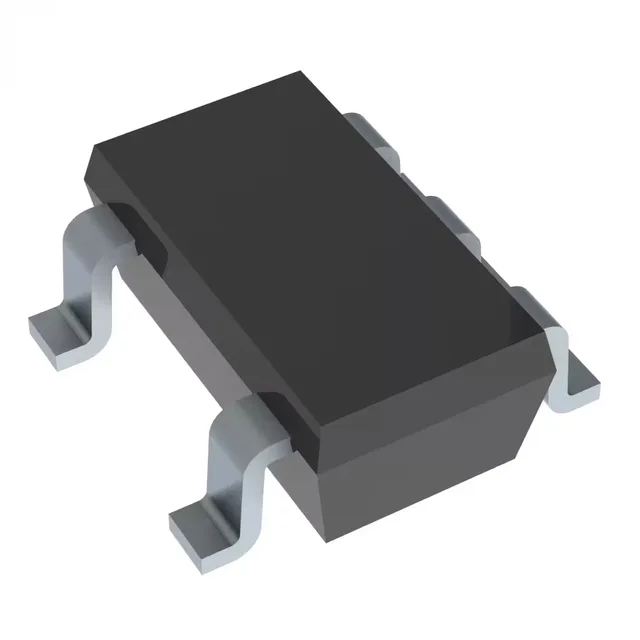
The SOT-23-5 package is a 5-pin surface-mount footprint, common on small-signal boards. Not rated for automotive or outdoor telecom enclosures.
RoHS compliance is standard for this TI family.