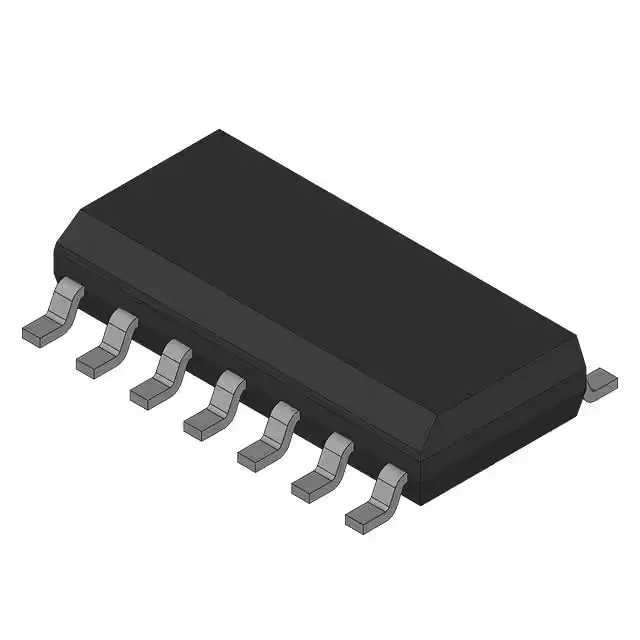
What this dual op-amp brings to the board
It combines a 2.7 MHz gain-bandwidth product with a 1.57 V/µs slew rate — modest for general-purpose filtering, buffering, and signal conditioning, but paired with an unusually high 320 mA output current per channel. That output muscle means you can drive a headphone load, a small DC motor, or a string of LEDs directly from the op-amp without an external buffer stage. The output stage is rail-to-rail, giving you the full swing into moderate loads. Input bias current is just 0.3 pA, which keeps offset errors low when you are working with high-impedance sensors or long time-constant filters.
Supply current vs. output current — the trade-off that matters
The TLV4113CD draws only 700 µA per channel of quiescent supply current, yet can source or sink 320 mA per channel. That is a standout ratio: you get a 450:1 output-to-quiescent ratio, which makes this part attractive for battery-powered equipment where the amplifier spends most of its time idle but needs to deliver bursts of load current — think portable audio, handheld test gear, or actuator drive in a low-power IoT node. The low quiescent current also keeps self-heating down in a 14-SOIC package, so you can run both channels near full output without thermal shutdown.
Temperature grade — indoor and office use only
It fits appliance control boards, office equipment, benchtop instruments, and consumer electronics.
Sourcing is through independent distribution — we quote firm pricing and availability against an RFQ, confirmed at order time. For dual-sourcing or a higher-speed alternative, the TLV9362IDDFR (10.6 MHz, 25 V/µs, industrial temp) is a functional peer in the same 2-channel rail-to-rail class, though it draws higher supply current.