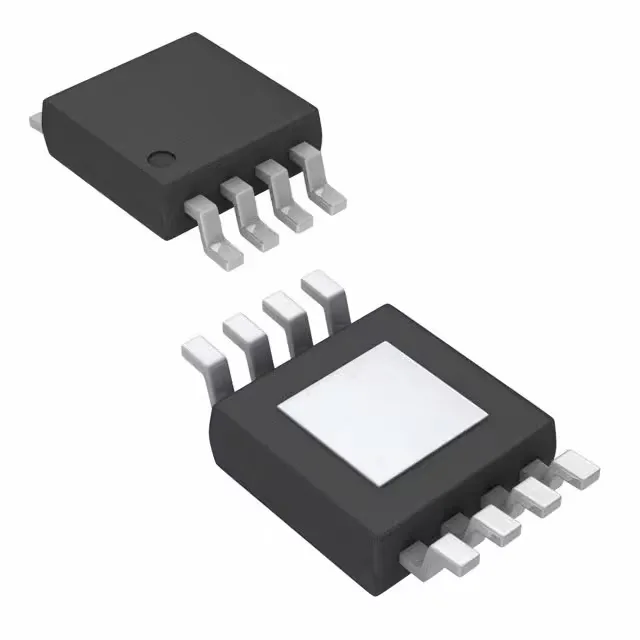
Active production, industrial temperature, and high output drive
It combines a 2.7 MHz gain-bandwidth product with a 1.57 V/µs slew rate, rail-to-rail output, and a 320 mA output current capability — enough to drive headphones, solenoids, or multiple ADC inputs without a separate buffer stage.
What the 320 mA output and 2.7 MHz GBW mean for the BOM
The 320 mA output per channel is the standout spec — most general-purpose op amps in this class deliver 20–60 mA. The 2.7 MHz GBW is adequate for audio-band filtering and moderate-speed control loops; if your application needs faster settling, the TLV9351IDCKR offers 3.5 MHz and 20 V/µs but only 60 mA output. The 700 µA supply current keeps the quiescent draw low enough for battery-operated equipment, and the 0.3 pA input bias current suits high-impedance sensor interfaces without excessive offset errors.
ROHS3 compliance means no exemptions for lead in solder — it ships ready for lead-free reflow profiles.
It is ROHS3 compliant and available through independent distribution. For dual-sourcing, the TLV9351IDCKR is a functional alternative with higher GBW (3.5 MHz) and faster slew rate (20 V/µs), but lower output current (60 mA) — verify the load requirements before substituting.