What the 90 kHz GBW and 4 µA supply mean for your BOM line
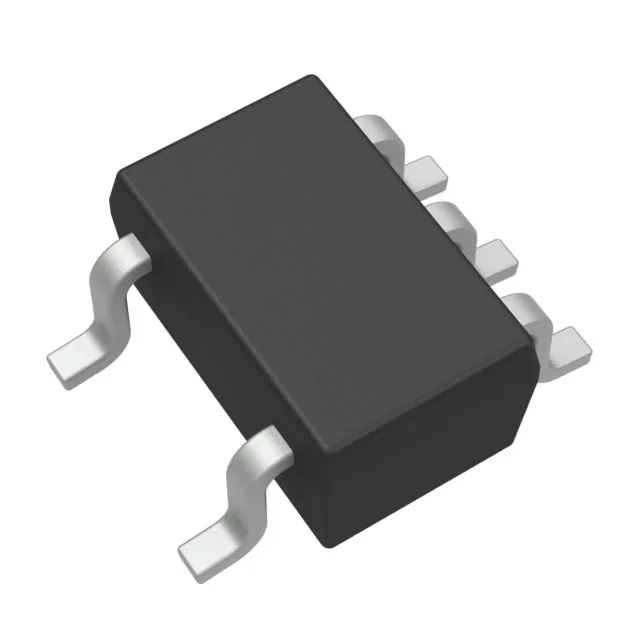
The TLV379IDCKT is a single-channel general-purpose op-amp from Texas Instruments, in the SC-70-5 package. Its 90 kHz gain-bandwidth product and 4 µA supply current place it in the ultra-low-power class — the 4 µA quiescent draw means it runs continuously on a small coin cell for years without dominating the battery budget. With a slew rate of 0.03 V/µs, this amplifier is sized for DC and low-frequency signal conditioning — think sensor front-ends, battery monitoring dividers, or reference buffers where the signal changes slowly. The 5 pA typical input bias current keeps the DC error negligible when driving high-impedance sources like photodiode or pH probe outputs. Rail-to-rail output swing means the amplifier can drive its output to within millivolts of either supply rail — useful when the ADC reference or comparator threshold sits near the rail and you cannot afford a Vce-sat drop.
Supply envelope and temperature grade
If the application needs better than that, a chopper-stabilised or auto-zero amplifier in the same package family is the next step up.