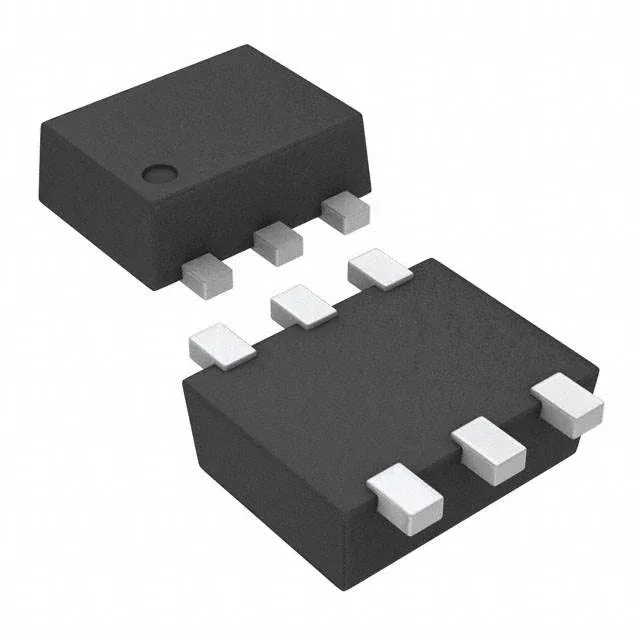
Texas Instruments TLV341IDRLR — Analog & Data Acquisition

TLV341IDRLR op-amp, 2.3 MHz, rail-to-rail output, SOT-5X3

MPNTLV341IDRLR
End of Life

Texas Instruments TLV341IDRLR general-purpose op-amp, 1 circuit, rail-to-rail output, 2.3 MHz gain bandwidth, 1 V/µs slew rate, 75 µA supply, 1.5 V to 5.5 V supply range, -40°C to 125°C, SOT-5X3 package.

$0.94Ref. price · indicative, final on quote
PackagingSOT-563, SOT-666
RoHSROHS3 Compliant
Independent supplier — new & surplus stockAuthenticity-screened · ESD-safe packingListing updated Aug 2026

Specifications

TLV341IDRLR specifications
ParameterValue
Output typeRail-to-Rail
MountingSurface Mount
Amplifier typeGeneral Purpose
Voltage - input offset300 µV
Voltage - supply span5.5 V
Current - supply75µA
Current - input bias1 pA
Current - output (Channel)115 mA
Operating temperature-40°C ~ 125°C
Gain bandwidth product2.3 MHz
PackageTape & Reel (TR); Cut Tape (CT)
Slew rate1V/µs
CaseSOT-563, SOT-666
Number of circuits1

Product details

2.3 MHz GBW, 75 µA supply — a balanced general-purpose op-amp

The 75 µA quiescent current keeps the power budget lean in battery-operated or loop-powered designs.

115 mA output drive from a micropower rail

A standout feature for this class is the 115 mA output current capability. The rail-to-rail output swing maximizes dynamic range at low supply voltages. Input bias current is 1 pA, typical for CMOS, so high-impedance sensors like photodiodes or pH probes won't see significant loading errors.

SOT-5X3 footprint for space-constrained boards

Mounting is surface-mount only. The package is small enough that manual soldering is impractical; reflow or hot-air rework is the intended assembly method. The tape-and-reel or cut-tape options match standard pick-and-place feeders.

Frequently asked questions

TLV341IDRLR vs MCP6001: which is better?

Both are single general-purpose CMOS op-amps with rail-to-rail output and similar supply ranges. The TLV341IDRLR offers a higher gain-bandwidth product (2.3 MHz vs 1 MHz) and higher output current (115 mA vs 23 mA), while the MCP6001 typically draws lower quiescent current (100 µA typical vs 75 µA). The choice depends on whether bandwidth and drive or absolute minimum power is the priority.